Sunulife · Tue, Mar 31, 2026 · 3 min read
The Words That Burn: An Exile's Diary of Survival

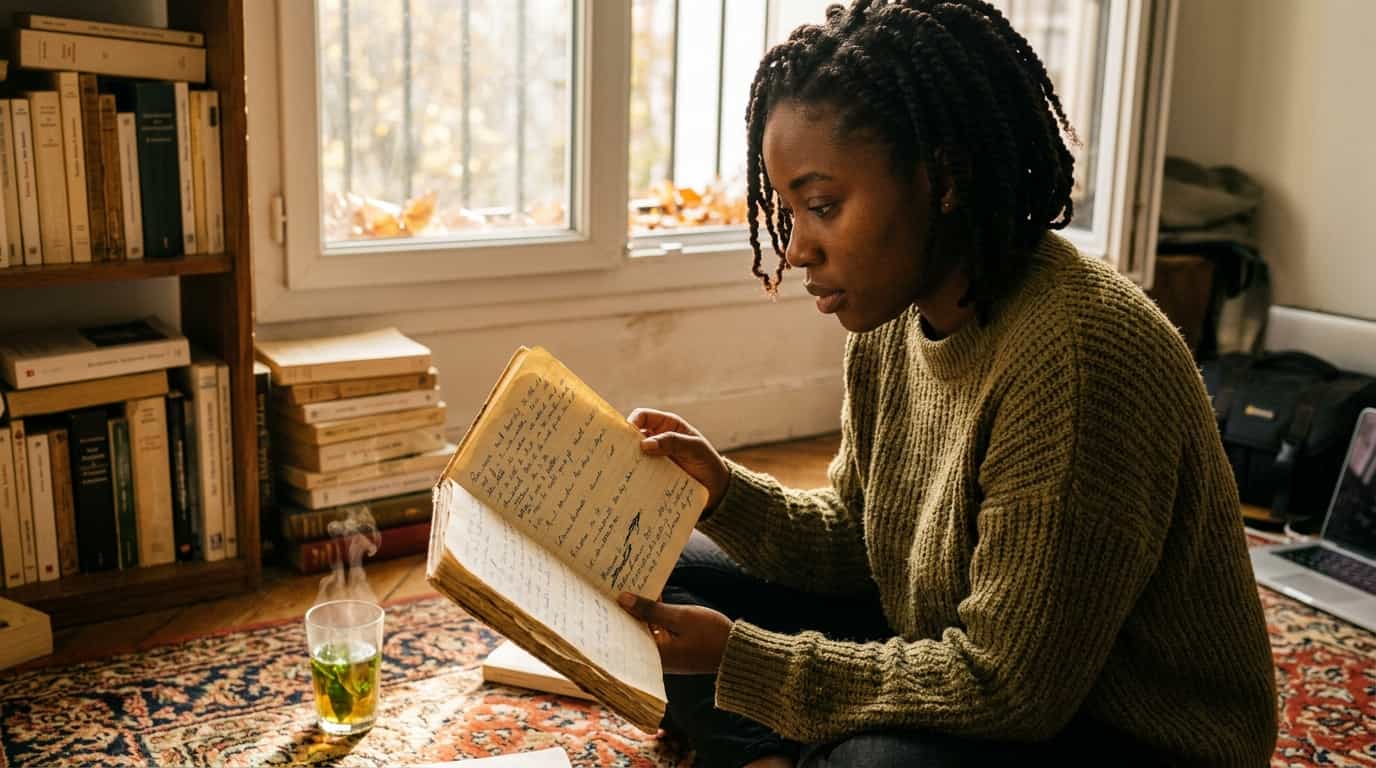
The notebook was hidden under a loose floorboard near the radiator. Eleni found it by accident while searching for a lost earring. A worn leather cover, no inscription. Inside, tight, nervous handwriting that raced across pages as if every word had to be captured before it escaped. She sat on the floor, back against the cold wall of this Brussels apartment she had just moved into, and began to read. The first entry was dated three years earlier. “Today I bought this notebook. I don’t know why. Perhaps to prove I still exist.” The author’s name was Selam. Ethiopian, like Eleni. Thirty-two years old. A lawyer in Addis Ababa before everything shifted. The pages first described fragments of daily life: the taste of morning coffee, light on the Entoto hills, her niece’s laughter. Then, gradually, shadows lengthened. Allusions to threats, disappeared friends, nights spent listening to street sounds while holding her breath. Eleni turned pages slowly, as if moving through fog. She recognized this language of fear. She had spoken it herself. The account of the escape came without warning. A March night. A backpack packed for weeks. A smuggler whose name went unmentioned. Crossing Sudan, suffocating days in overloaded trucks, avoided glances. Selam wrote with surgical precision, as if noting details—the color of sand, the smell of gasoline, the metallic taste of fear—could protect her from madness. “I became a body in motion, a bundle of taut nerves. My thinking stopped. Only my senses worked, on permanent alert.” Then, arrival in Europe. Brussels. A reception center, forms, endless waiting. Selam described the absurdity of having to prove her own suffering, to put into words traumas that resisted language. “They want a coherent story, with a beginning, middle, and end. But my life has become a puzzle with missing pieces.” Pages grew scarcer, entries more spaced out. Depression, that inner silence smothering everything. Sleepless nights in this same room where Eleni now sat, staring at the ceiling wondering if she would ever feel at home anywhere.
But something shifted toward the notebook’s end. Selam began noting small victories. A conversation in French with a shopkeeper. A smile exchanged on the metro. Discovering an African bookstore where she bought a novel by Maaza Mengiste. “I cried reading it, not from sadness, but recognition. Someone had put words to what I carried inside.” She described her first steps toward rebuilding: Belgian law classes, volunteering at a migrant aid organization, a fragile friendship with a Senegalese neighbor. “I am no longer who I was. I will never be that person again. But I am beginning to glimpse who I might become.” The last entry was six months old. “I move tomorrow. A real apartment, with a window facing a tree. I leave this notebook here. Maybe someone will find it. Maybe it will give them courage. Words survive. They burn sometimes, but they also light the way.” No signature. Just a date. Eleni closed the notebook. Night had fallen over Brussels. Through the window, she saw city lights, this foreign landscape slowly becoming familiar. She placed her hand on the worn cover, like touching a relic. She was no longer alone in this room. Two lives intersected in the darkness, separated by time but connected by ink and paper. Tomorrow, she would buy a notebook of her own. She would write her own story, word by word. Because words do survive. They burn. And sometimes, they save.