
Narratives
Sunulife · Wed, Apr 29, 2026 · 2 min read
The Ghosts of Lagos: A Story of Love, Poetry, and Anger
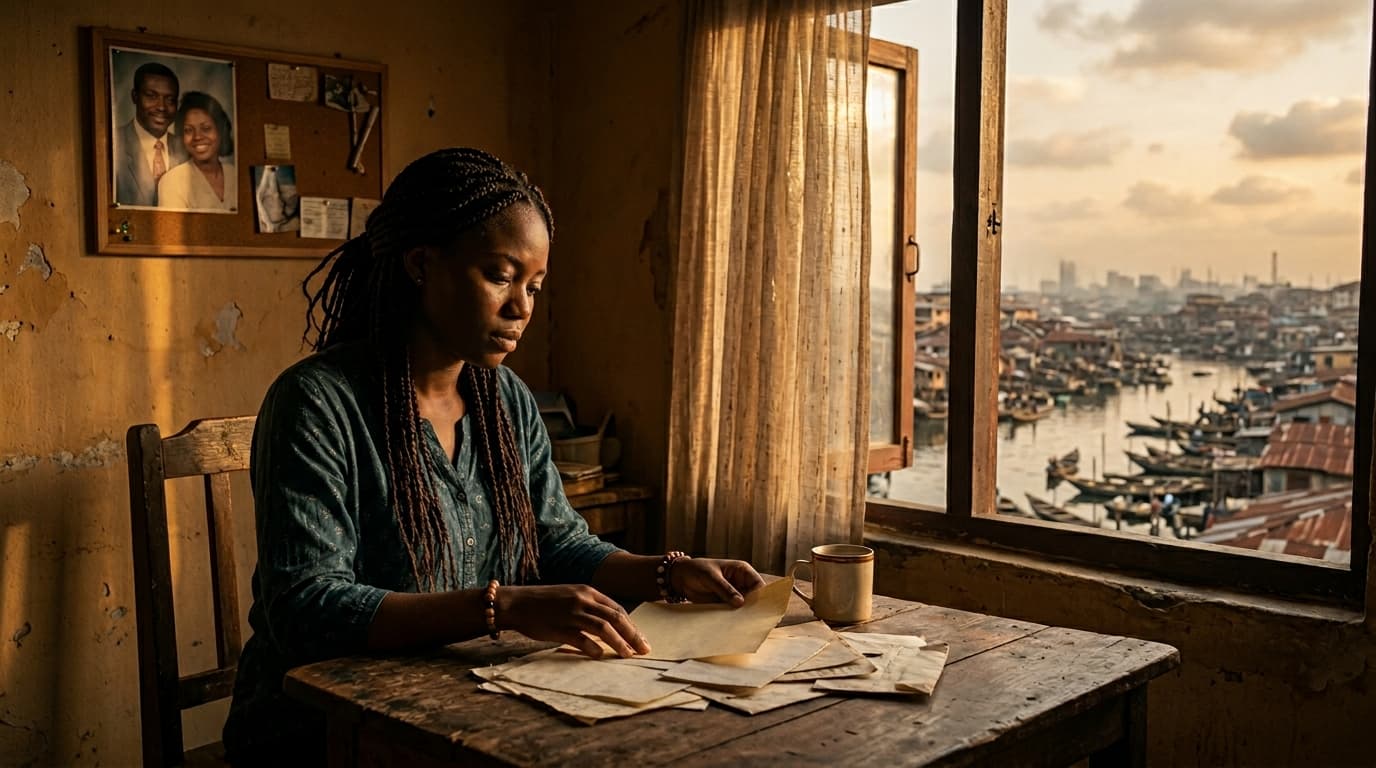
The day Funmilayo moves into the third-floor apartment in Ikoyi, she does not yet know that the walls have a memory. The lagoon, through the window, is a sheet of liquid silver under the midday sun. She sets down her boxes, two suitcases, an Olivetti typewriter bought from a junk dealer in Yaba. The landlord, an old man with fingers yellowed by tobacco, told her: "The last tenant was a poet, like you. She died here." Funmilayo shrugged. In Lagos, the dead are everywhere—in traffic jams, in markets, in the laughter of children. You don't make room for them. But on the first night, she hears them. Not footsteps, no. A rustling of paper, as if someone is flipping through a book in the next room. She turns on the light. Nothing. The next day, while moving the wardrobe, she finds a rusty iron box. Inside, letters, about twenty of them, yellowed, packed tightly in a kraft envelope. The handwriting is fine, nervous, almost illegible. Funmilayo sits on the floor, her back against the wall, and begins to read. The letters tell a story. A woman, Adaeze, loves a man she cannot have. He is married, powerful, perhaps a politician. The letters are dated from the 1990s, the era of dictatorship, when Lagos suffocated under curfew and fear. Adaeze writes from this same room. She describes the lagoon as a broken mirror, the boats gliding silently, the sleepless nights. She writes: "I am a willing prisoner. I choose not to leave him, even if it kills me." And Funmilayo feels a shiver run down h