Narratives

Sunulife · Fri, Apr 3, 2026 · 5min read

Grandmother's Silences: When Omission Becomes Inheritance
Grandmother's Silences: When Omission Becomes Inheritance
Favourite

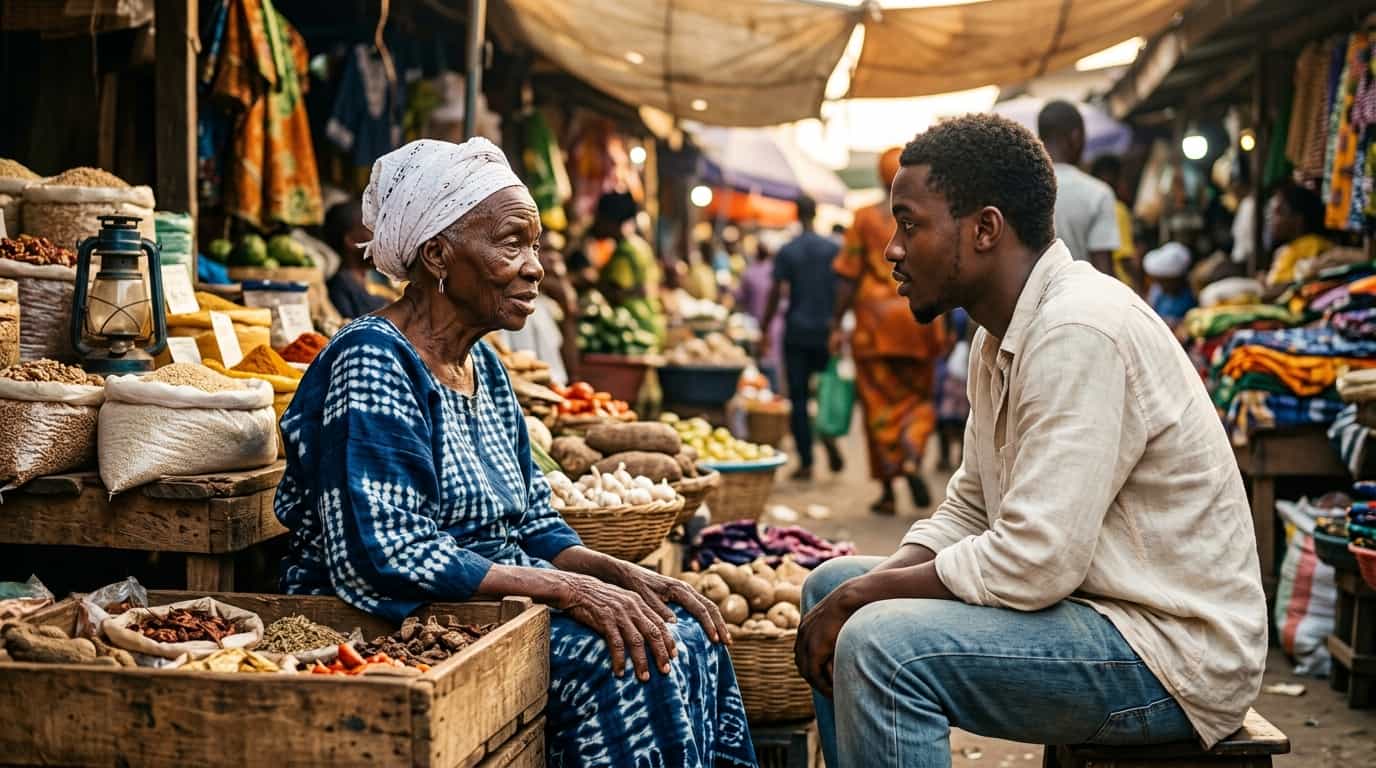
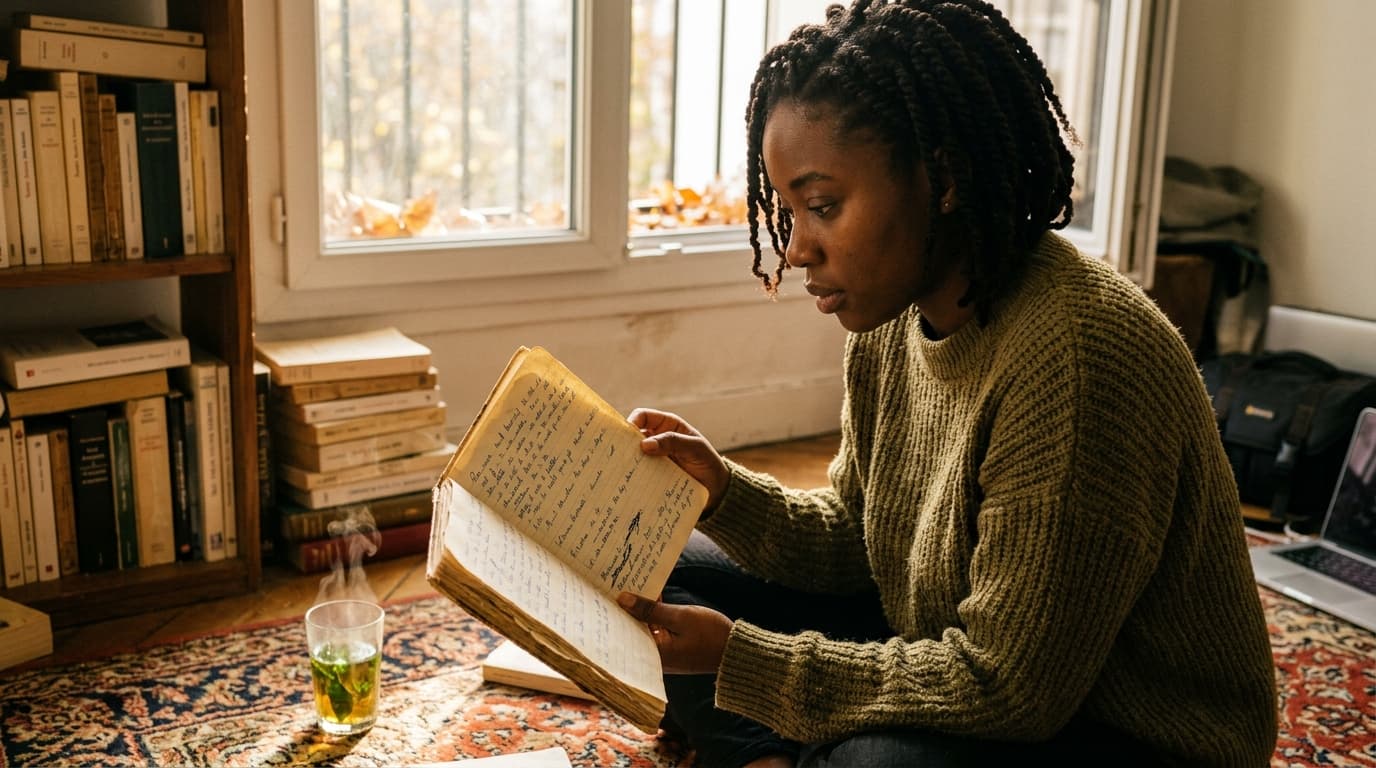
The scent of mint tea still lingers in the 14th arrondissement apartment, mingling with the smell of old books and dust dancing in the autumn sunlight. Sitting on the worn living room carpet, Ama holds her grandmother Abena's notebook in her hands. The pages are yellowed, the corners dog-eared, the blue ink faded by time. But what strikes Ama isn't the words written in trembling script, but the blanks, the empty spaces, the interrupted sentences. The omissions. Abena died three months ago in Accra, having never told her granddaughter how she fled Ghana in 1972, nor why she chose Paris over London, nor what happened to her twin brother Kwame, whose name appeared only in the margins of letters, always crossed out. "Kwame is..." and then nothing. "I remember the day when..." and the sentence stops. Ama, a twenty-eight-year-old documentary filmmaker, had always believed stories were told with words. She now discovers they're also transmitted through what goes unsaid. Ama's film project about the memory of Ghanaian women in the diaspora has stalled. She secured a co-production grant through the HBF+Europe fund, but every time she tries to write the screenplay, the words escape her. It's while flipping through Abena's notebook that she understands why: she's looking for answers where there are only questions, certainties where there are only silences. Her grandmother, that elegant woman who taught her to make mint tea while telling Ashanti folktales, had carried secrets so heavy she couldn't share them, even with her favorite granddaughter. Ama decides to return to Accra. Not to find answers, but to inhabit the questions. She walks through the streets of Jamestown, where Abena grew up, she sits on the steps of the family home, now occupied by distant cousins. She listens to the neighborhood elders talk about the era of coups d'état, the nights when soldiers knocked on doors, the disappearances never explained. No one mentions Kwame directly, but his absence is palpable, like a ghost haunting every conversation. In a scene that will remain etched in Ama's memory, an old neighbor of Abena's, Adjoa, hands her a yellowed photograph. It shows two teenagers, a boy and a girl, standing in front of the same house. "It was their fifteenth birthday," Adjoa murmurs. "Abena and Kwame. They were inseparable. Then one day, Kwame didn't come back from school. They said he'd joined the student activists. Your grandmother never spoke of it again." Back in Paris, Ama understands her film won't be Abena's biography, but an exploration of the silences that traverse generations. She begins filming the empty spaces: her grandmother's chair in the kitchen, the picture frame without a photo on the mantelpiece, the blank pages of the notebook. She interviews other diaspora women about what they haven't passed on to their children: the traumas of exile, impossible loves, abandoned dreams. Each omission becomes a doorway to a story larger, more complex than words could contain.

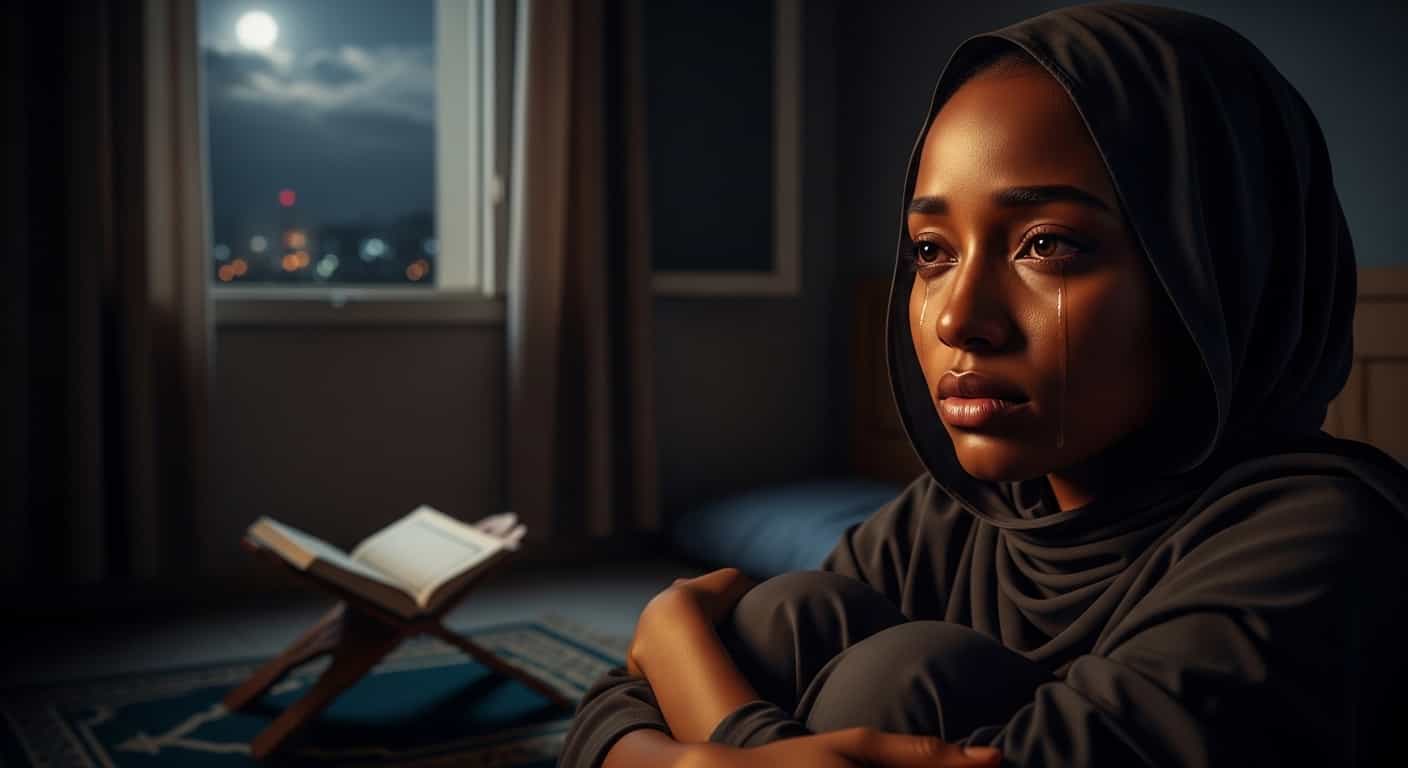
Ama's film, titled "The Missing Words," will be presented at the African film festival in Ouagadougou the following year. In the editing room, as she reviews the final sequence, Ama sees again the images of Accra mixed with those of Paris, the faces of the interviewed women, and especially, the silences between their sentences. She finally understands what Abena bequeathed her: not a complete story, but the ability to listen to what isn't said, to see what isn't shown, to create from what's missing. The film's final scene shows Ama sitting at her grandmother's table, pouring tea into two cups. One for herself, one for the absence. The camera moves closer to her face, where a tear flows silently. It's not a tear of sadness, but of recognition. She has learned that the most precious inheritance isn't always in what we're given, but in what we're allowed to seek. Abena's omissions weren't voids, but spaces for creation, invitations to write her own story through the interstices of her grandmother's. Today, Ama is working on a new project supported by the Ghanaian government film fund. She wants to train young filmmakers to tell the untold stories of their communities. "We've been conditioned to believe only complete stories deserve to be told," she says during a conference in Accra. "But it's often the fragments, the silences, the omissions that contain the deepest truth." In her Paris apartment, Abena's notebook now rests on a shelf next to the awards Ama's film has won. Sometimes, in the evening, Ama opens it and looks at the blank pages between sentences. She no longer tries to fill them. She inhabits them. Because she now knows that some inheritances aren't transmitted through words, but through the spaces between them, through what remains to be invented, imagined, created. And in those spaces, she finally hears her grandmother's voice, not telling a story, but giving her permission to write one of her own.