
Narratives

The Tearing: A story of silence, sacrifice, and the scars women carry alone

The story follows Aita, a Senegalese woman who, after a teenage pregnancy and botched abortion, carries the secret of her resulting sterility for years. Rebuilding her life in France, she marries but hides her past, leading to a childless marriage built on lies. The narrative explores the devastating personal cost of societal silence and the impossible expectations placed upon women.
AitaSat, Apr 11, 202619min read
The Tearing: A story of silence, sacrifice, and the scars women carry alone
“Hot water never forgets it was once cold.” — Senegalese proverb.

The Verdict


The envelope was still warm in her hands when the world ended.

Aita Doucouré stood in the sterile corridor of her gynecologist’s office, thirty-one years old, a successful IT manager, a wife of eight years, and she was reading, for what she already knew would be the last time, the results of yet another fertility test. The words swam before her eyes. Blocked fallopian tubes. Probable consequence of an old infection. Prognosis: conception naturally is no longer viable.

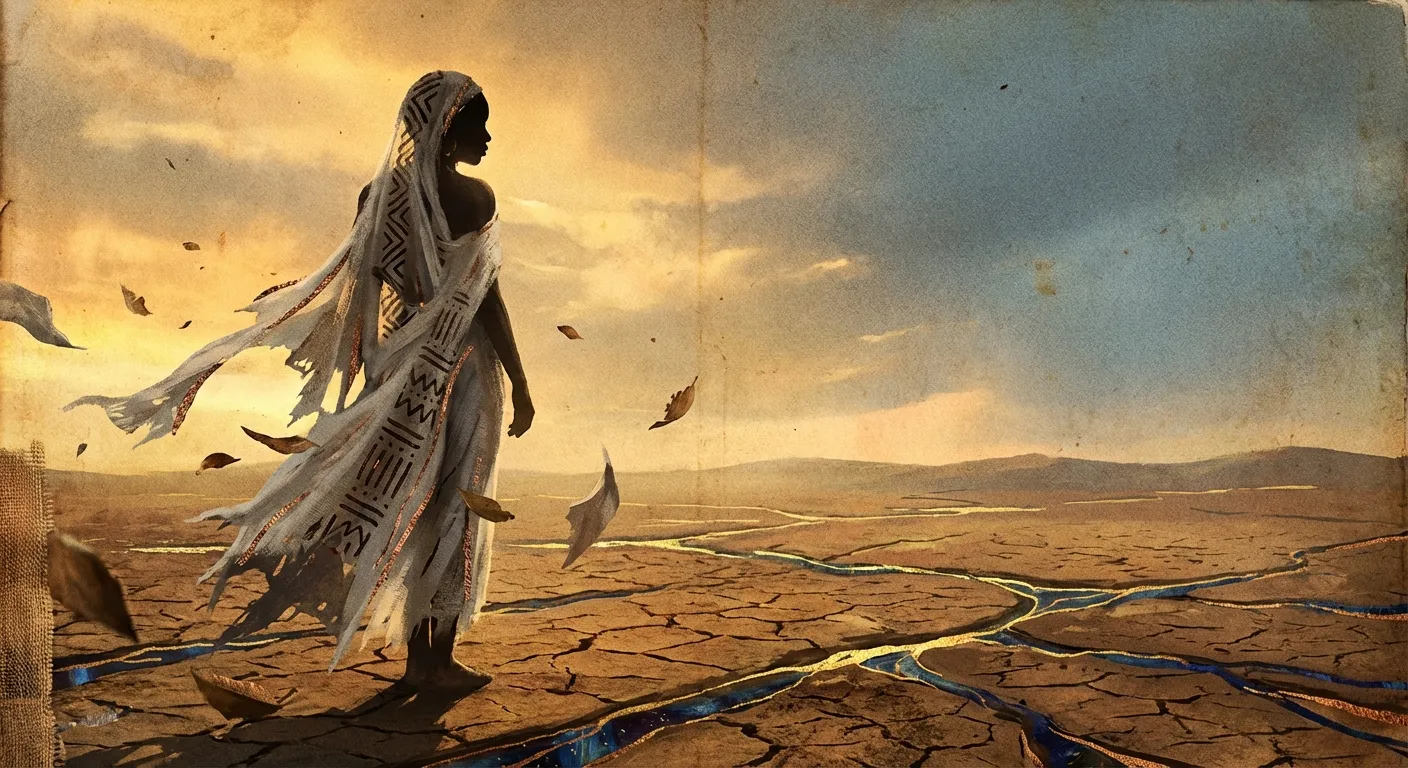
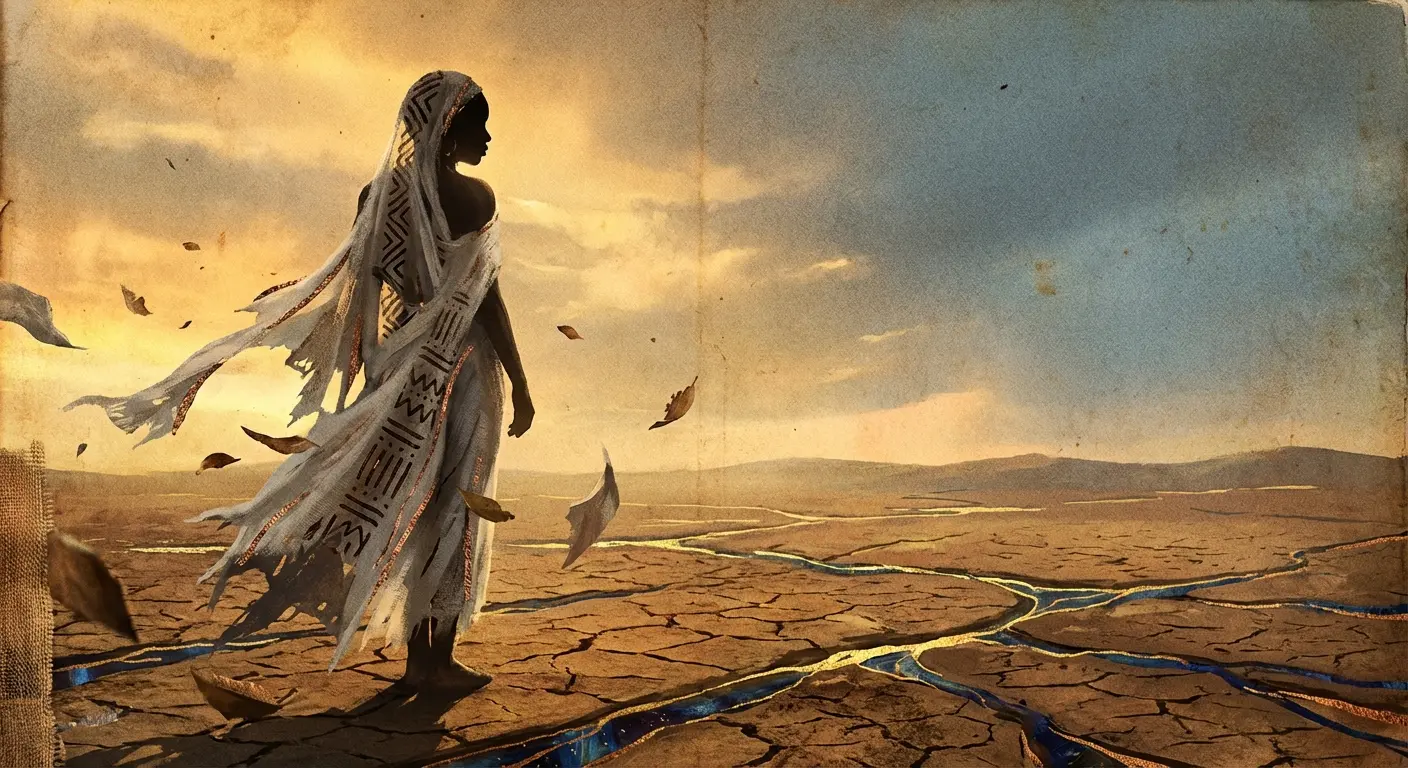
She crushed the envelope. She crushed it the way you crush something when you have nothing left to crush inside yourself. The paper crumpled in her fist like a dead leaf—and isn’t that what she felt like? A dead leaf, spiraling in a wind she could not control, torn from the branch that once gave her life.

Stérile. The word detonated in her skull. Sterile. Irremediably. Without shadow. Without soul.

Her womb would never know the weight of a child. Her arms would never swaddle an infant. She would never guide a small hand across a first page, never hear a voice call her Maman and mean it in that desperate, total way that children do.

The tears that came were not the tears of the moment. They were eight years of tears. They were the residue of every failed treatment, every hopeful injection, every flight to Paris and New York and Montreal, every marabout consulted in the deep Senegalese interior—from the Cayor to the Casamance, from Tambacounda to Bafoulabé in Mali—every prayer whispered into the silence of a God who seemed, for reasons she dared not examine, to have turned His face away.

She stumbled to her car. She leaned against it, indifferent to the stares of passersby. She was inside a cocoon now, wrapped in something the world calls pain but which, at its most intense, transcends that word entirely. Pain implies a wound that might heal. This was erasure.

She started the engine. She drove. But she was not behind the wheel. She was fifteen years in the past, in a small room in Kaolack, on a makeshift examination table, while a woman who was not a nurse and not a doctor performed an act that would hollow out her future before it ever arrived.

The Girl She Was

To understand the woman in the car, you must first understand the girl in the military camp.

Mame Aita Niang grew up golden. Her father was an officer in the Senegalese army, eventually rising to the rank of colonel. Her mother, Sokhna Alimatou Dème, was a civil administrator and a descendant of a prestigious maraboutic lineage—her grandfather had been a celebrated disciple of one of Senegal’s greatest Muslim leaders. Alimatou herself had nearly never been educated. As a child studying the Quran at the Daara, she contracted a severe case of measles. Catholic nuns at a local dispensary treated her and, recognizing her sharp intelligence, urged her parents to enroll her in modern schooling. Her father, who believed a woman’s role was marriage and children, resisted. It took the intervention of his own venerated marabout to change his mind. From that unlikely beginning, Alimatou rose through the school system, earned a law degree at the University of Dakar, and completed her training at the École Nationale d’Administration in Paris.

She became a woman of formidable principle. Rigid. Uncompromising. A woman who never forgot where she came from—the hot water that remembered it was once cold. And she raised her children, three sons and one daughter, accordingly.

Aita was the daughter. The only girl. And in this household of discipline and duty, there was one subject that was never, ever discussed: sex.

Her mother spoke endlessly about virtue. About arriving pure at marriage. About the respect a virgin bride commands from her husband. But she never once explained the mechanics of the body, never named the dangers, never armed her daughter with the knowledge that might have saved her. The rare information Aita received about sexuality came from her economics teacher, Mme Senghor, and her biology teacher, Mr. Cabou. Clinical fragments. Textbook abstractions. Nothing that prepared a sheltered sixteen-year-old for what was coming.

And so, when Pape Seye arrived—handsome, confident, assigned as her father’s driver—Aita was defenseless in ways she did not even know she was defenseless.


The Soldier and the Schoolgirl


He was a first-class soldier. She was in seconde at a private Catholic school in Kaolack. Her classmates swooned when he pulled up in her father’s service car. Some asked her to play matchmaker. Aita, who knew almost nothing about flirtation, who had never been to a party outside a military camp, who bought sweets in secret because even sugar was regulated in that house—Aita was baffled by the attention. She was not beautiful, she told herself. Average height, carrying extra weight from the candy she couldn’t resist, her face marked by acne she tried to treat with dermatological creams. Why would the handsome Pape Seye look at her?

But he did. He persisted. And she fell.

Their relationship unfolded in whispers and stolen detours—brief walks between school and home, careful choreography designed to hide everything from the colonel and the administrator. For five months, they existed in this fragile secret. Then came the birthday party.

A classmate invited the whole class to celebrate at her house on a Saturday. For Aita, it was unprecedented: her first party outside a military camp. Her parents, trusting Pape as her chaperone, gave their blessing. They did not know they were handing their daughter to the very danger they had spent her entire life trying to prevent.

At the party, Pape suggested they leave. His friend Assane Lô lived nearby. They walked there, arm in arm, like lovers do. Assane welcomed them warmly, bought drinks, then discreetly disappeared.

What happened next, Aita could barely narrate even to herself. It began with a kiss. Emboldened by her response, Pape pushed further. She protested. She invoked marriage. He called her prudish. And then it was done. Her virginity—that sacred thing her mother had spent sixteen years building walls around without ever explaining what lay inside those walls—was gone.

Afterward, Pape’s first concern was himself.

“Your parents must never find out,” he told her. “Imagine what would happen to my military career.”

She had just lost something she could never recover, and he was calculating his professional risk. She walked into her parents’ house that night like a fugitive entering a fortress. Her father noticed something was wrong. She blamed fatigue. She fled to her room and scrubbed herself in the shower, trying to wash away what no water could reach.

She did not sleep that night. She lay in bed until dawn, turning over and over, mourning an innocence she had placed on the altar of naïveté.


The Weight of Silence

One month later, the nausea began.

Aita woke one morning vomiting before school. She blamed dinner. The next morning, the same. Then she remembered her economics class—the lesson on pregnancy. She calculated her cycle. Fifteen days late.

The confirmation came from a midwife at a regional health center where Pape drove her, far from anyone who might recognize the colonel’s daughter. Six weeks pregnant. Aita collapsed into the woman’s arms, sobbing. The midwife was kind. She asked questions. She tried to educate them both about what had happened and what could be done. But when she reached for her notebook—your address, please—Aita bolted. She ran out the door, convinced the woman would inform her parents.

Pape caught her. He calmed her. Then he delivered his ultimatum, not that day but shortly after, in a cold, measured voice that revealed exactly who he was: “I have no intention of ruining my life because you’re full of scruples. Keep the baby if you want, but don’t count on me. My brother in Italy is arranging work for me there. Think carefully about what you’re going to do.”

She was sixteen. Pregnant. Alone in every way that mattered. Her boyfriend was planning his escape. Her parents were the last people on earth she could tell. She had no money, no allies, no one to turn to. She considered running away—but where? She considered suicide—but rejected it as a second sin on top of the first.

The only option left was the one she could barely say aloud: avortement. Abortion.

Assane found the woman. She called herself a nurse. She worked from her home. Her fee: 50,000 CFA francs. Pape paid. The appointment was set for the next morning.

Aita went to school as usual. At nine o’clock, she faked a headache and was sent home. Pape was waiting at the corner. They walked in silence to the woman’s house. Aita described her own footsteps as if chains had been attached to her ankles, each step heavier than the last, a condemned prisoner being led to the scaffold.

She lay down on a makeshift examination table. The woman introduced a metal instrument. Blood. Searing pain. Unconsciousness.

When she came to, she felt something metallic and cold compressing her heart. A vast emptiness had taken up residence inside her adolescent body—a body she would later describe as mutilated and crippled. The two women helped her dress. Pape and Assane drove her home. She climbed the stairs in silence, stifling her pain so the housemaid wouldn’t notice, and collapsed on her bed.

That night, the hemorrhaging began.


The Unraveling

Her screams woke her parents. They found their daughter soaked in blood, the sheets beneath her turning crimson. They rushed her to a private clinic nearby. She lost consciousness in the car.

When she opened her eyes, everything was white. Her mother sat beside the bed, a glacial mask barely containing a subterranean anguish. The doctor told them both: Aita had nearly died. The procedure had been performed by an amateur—a former hospital aide masquerading as a nurse, already known to police for similar crimes. A botched, clandestine abortion.

Aita told the truth. All of it. The relationship with Pape, the party, the pregnancy, the desperate decision. Her mother listened without interrupting. The doctor listened. And when Aita finished, her mother spoke.

“You can consider yourself damned. You have joined the ranks of criminals. Not content with fornication, you have coldly killed an innocent. You are a monster, Mame Aita, and you must be treated as one.”

Then she walked out.

Her father was different. The military man, the man of discipline, showed more humanity than the woman who had given her life. He sat at her bedside and said, gently: “You should have talked to us before resorting to such an extreme solution.” When Aita explained her fear, he admitted: “I concede that we were too severe in the way we raised you.” He promised her that her mother would come around. He was wrong. Fifteen years later, Sokhna Alimatou Dème had still not forgiven her daughter.

The police arrested the so-called matrone. She was sentenced to five years in prison. Pape Seye and Assane Lô fled the country and were convicted in absentia. The school was never told. Aita returned to class two weeks later with a medical certificate and finished the year first in her class—a desperate act of redemption that moved no one in the one place it mattered most: her mother’s heart.

From that day forward, Aita’s only confidant was a diary. Her repository of anguish, her purgatory, her most faithful companion in a world that had stopped listening.


Reinvention and the Lie

Aita earned her baccalauréat and escaped to France. Two years of preparatory classes, then admission to ENSEEIHT in Toulouse, where she graduated as a computer engineer. She returned to Senegal after six years abroad and was hired by STI, a major IT firm. Within five years, she was promoted to partner. She had rebuilt herself, brick by brick, over the ruins of her adolescence.

Then she met Moctar Doucouré.

He was handsome, ambitious, charming—a known heartbreaker whom the most beautiful women in Dakar pursued. They met by chance in Saly Portudal, that luminous resort town on the Senegalese coast. Aita did not take his advances seriously. She could not fathom why a man like him would want a woman like her—still carrying the self-image of the awkward, overweight girl from the military camp. But Moctar was persistent, and eventually he reached her heart.

He proposed. And then he said the thing that turned her blood to ice: “You are a virgin, Mame Aita, aren’t you?”

She froze. He took her silence as confirmation. He pressed her hand and told her that her honor was the most beautiful gift a woman could offer the man she loved. She tried to speak. He put a finger to her lips: “Shh. Don’t say anything, my darling.”

And so the lie was sealed. Not by her words, but by his finger on her mouth.

Aita found the solution in a magazine article she remembered from her student days in France: hymenoplasty. Surgical reconstruction of the hymen. She booked a flight to Paris under the pretext of wedding shopping. The operation took less than two hours. The gynecologist told her it could have been done in Senegal—information that arrived, like so much in Aita’s life, too late to matter.

She walked through Paris afterward, whistling. Passersby stared. She did not care. She was, for a brief and brilliant moment, happy.

Her mother, when Moctar officially asked for Aita’s hand, was cold. “I hope you had the honesty to tell that boy the truth,” she said when they were alone. Aita pretended not to understand. Her mother’s voice turned to ice: “You know exactly what I’m talking about. Tell him about your past, or you’ll have a nasty surprise later. One is never too careful.”

Aita chose Moctar’s love over her mother’s warning. The wedding night at the hotel in Saly—the same place they had met—went perfectly. The next morning, Moctar called his mother-in-law to thank her for raising a virtuous daughter. Alimatou, furious, called Aita privately: “You are nothing but a liar and a fraud. I don’t know what trick you used, but he will unmask you sooner or later.”

The chasm between mother and daughter widened into an abyss.


The Empty Cradle


They were happy. Moctar’s family embraced her. His father told her to consider herself a full member of the household, not merely a daughter-in-law. They lived with his parents for two years before moving into their own villa in the residential quarter of Yoff.

But the baby did not come.

One year. Two years. Five years. The whispers began. The looks—sometimes accusatory, sometimes pitying—from relatives and neighbors. Aita retreated into herself, becoming, as Moctar would later describe, a hunted animal. He defended her. He accompanied her through every treatment: in vitro fertilization in Senegal, insemination attempts in France, the United States, Canada. They consulted traditional healers across the country, spending fortunes on mystical cures. From the Cayor to the Casamance, from Tambacounda to Bafoulabé—Aita and Moctar traveled the length of the Senegalese interior, chasing miracles.

Nothing worked. And Aita knew why. She had always known why.

Her gynecologist had explained it plainly: her fallopian tubes were blocked, the probable consequence of an old infection. When Aita confessed the clandestine abortion, the doctor confirmed it. The damage was done that night in Kaolack, on a makeshift table, by a woman who was not a nurse, with instruments that were not sterile, in a procedure that should never have happened.

Everything—every treatment, every flight, every marabout, every prayer—had been, from the very beginning, a war against a wound that could not be healed. And Aita could not tell her husband the truth. Because the truth would mean confessing not only her sterility, but her past, her lie, the surgery in Paris, the entire architecture of deception on which their marriage was built.

Eight years of marriage. Eight years of silence. Eight years of watching Moctar’s hope curdle into frustration.


The Confrontation

On the day of the final diagnosis, Moctar stood at the bay window of his office, hands shoved in his pockets, grinding his teeth without realizing it. He had been waiting for Aita’s call for hours. She had gone to the gynecologist alone—again—refusing his company, and now she was not answering her phone.

He called once. Seven rings. Silence. He called again from his office line. Nothing. He called the house. Rama, the maid, told him Aita had come home and gone straight to bed. He demanded to speak to her. Rama said the bedroom door was locked.

He left the office. He drove at breakneck speed. He stormed up the stairs. He threw open the door.

Aita saw his face and recoiled. She had never seen this fury in eight years of marriage.

“Explain yourself,” he said, his voice a blade, “or I will not be responsible for what I do.”

She tried. She mumbled about the test results, about the difficulty of conception. He cut her off.

“Don’t play with words. You are ste-rile.” He spelled it out, syllable by syllable, each one a hammer blow.

She pleaded: more treatments, artificial insemination, hope. He laughed bitterly. “Until when? One year? Two years? Ten years? Or for life, while we’re at it?”

Then came the accusation that pierced her to the marrow: “What if you knew all along? What if you knew before our marriage?”

She froze. Because of course she had known. Not the exact clinical details, but the root cause—the botched abortion, the infection, the damage—she had carried that knowledge like a stone in her chest for fifteen years.

He stood up. “Excuse me. I’m moving to the guest room. I need to think.” He gathered his things and left. He did not look at her once.

Meanwhile, downstairs, a third story was unfolding in silence. Rama M’Bayé, the faithful maid of five years, glanced instinctively at her own belly, where she had been tying a scarf for weeks to hide what was growing inside her. She had her own crisis. But in that house, on that day, there was room for only one catastrophe at a time.


The Fracture

In the days that followed, Moctar Doucouré stood at the edge of his own abyss. Take a second wife? Divorce? He didn’t know. What he knew was that he could no longer bear to watch Aita in her desperation, could no longer absorb the weight of a childless marriage in a society where children are considered the cement of a union, the proof of God’s blessing.

He considered leaving—not to his parents’ house, where his mother would inevitably push him toward polygamy, but to a studio apartment, a neutral space where he could breathe. His colleague and friend Adji Dieng—beautiful, brilliant, a former model turned marketing executive—had counseled patience: support your wife, she said. Wait. But Moctar was at the end of his rope.

And Aita? Aita sat in the wreckage of her marriage and understood, with a clarity that comes only at the bottom, that she was paying for a crime committed at sixteen. A crime she did not choose alone. A crime born of ignorance—her parents’ silence about sex, her boyfriend’s cowardice, a society that punishes girls for what it forgives in boys.

She remembered the sage-femme’s words from all those years ago, the division she had recognized even as a teenager: on one side, men, with their pleasure, their freedom, their ability to flee. On the other, girls, with their shame, their subjugation, their bodies turned into evidence of a crime in which they were both victim and accused.

She remembered her mother’s warning, adapted from an American president: “You can fool someone for a time. You can fool someone for part of the time. But you cannot fool someone all of the time.”

She remembered the metallic cold inside her body after the abortion, the void that moved in like a tenant who would never leave.

And she remembered what she had written in her diary, year after year, in the only place where the truth existed: I am paying. I am still paying. I will always be paying.


Coda: What the Silence Cost

Déchirure means tearing. It is the word for a wound that does not cut cleanly but rips—jagged, uneven, leaving edges that never quite align again when you try to close them.

Aita’s story is a tearing in every direction. The tear between a girl and her body. Between a daughter and her mother. Between a wife and her husband. Between a woman and the child she will never hold. Between truth and the elaborate scaffolding of lies built to survive in a world that demanded her perfection while denying her the tools to achieve it.

But Déchirure is not only Aita’s story. It is the story of millions of girls across West Africa and beyond who navigate the impossible geometry of sexual ignorance, social expectation, and biological consequence. Girls whose mothers guard the concept of virginity like a sacred flame but never explain what fire is. Girls who discover their bodies through the hands of men who will not stay to face what follows. Girls who turn to back-alley procedures because the law gives them no legal alternative and society gives them no forgiveness.

Aita survived. She built a career. She found love. But the foundation of her adult life was laid on a fault line, and eventually, inevitably, the ground shifted.

The most devastating line in this story is not the doctor’s diagnosis or the husband’s fury or the mother’s rejection. It is the quiet observation Aita makes about the division of consequences: to men, the pleasure and the freedom to flee. To girls, the shame, the subjugation, the insults, the rejection.

Injuste, n’est-ce pas? she asks. Unfair, isn’t it? Yes. Because the fruit should have been divided in two.

Aita’s crime was not the abortion. Aita’s crime was being a girl in a world that armed her with nothing and then punished her for falling.

And the tearing continues.