
Heritage
Sunulife · Sun, Jun 7, 2026 · 2 min read
Keepers of the Unseen: When Africa Rewrites Its Memory
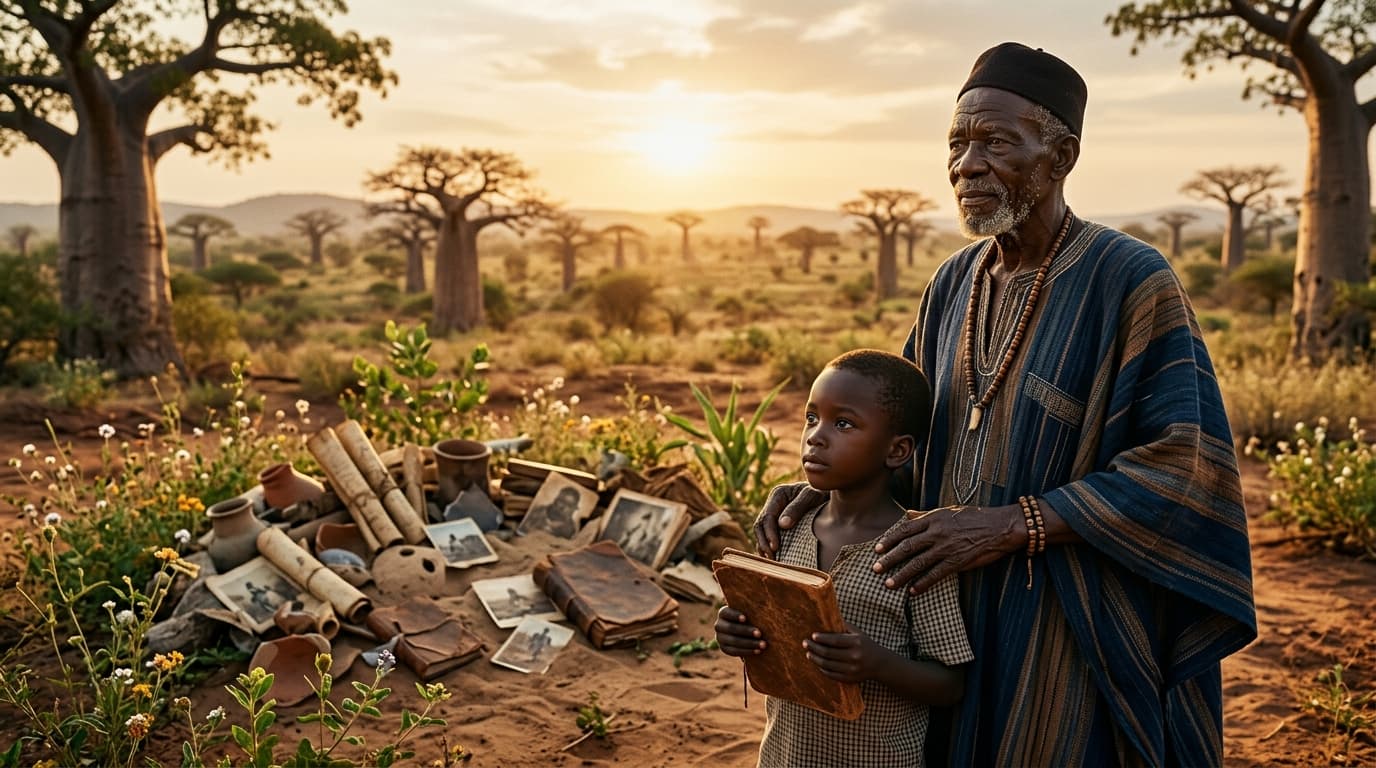
There is a memory that never sleeps. It pulses beneath the dunes of the Sahel, in the songs of griots, in the folds of ceremonial boubous. In Senegal, in Mali, across West Africa, heritage is not a dusty relic: it is a living force that shapes the present. But who still remembers the names that official history has erased? The Wolof Empire, for instance, was never a mere footnote in colonial textbooks. In the 15th century, as Europe was barely emerging from its medieval darkness, the Djolof ruled a vast territory, structured by sophisticated political institutions. Its sovereigns, the Bourba Djolof, wielded power with a wisdom that European chroniclers, blinded by their prejudices, could never describe. Today, Senegalese scholars are unearthing these oral archives, breathing life back into systems of governance where a spoken word was worth more than any written treaty. Then comes the name of Cheikh Anta Diop, the giant who dared to assert that ancient Egypt was African. In his seminal work, Nations nègres et culture, he did not merely prove a lineage: he restored a continent's dignity. His struggle was not only academic; it was a war of memory. Every page of his work is an act of resistance against the symbolic theft of our past. At the University of Dakar, students still crowd lecture halls to hear his heirs, carrying the flame of a truth that some sought to extinguish. And what of Lat Dior, the damel of Cayor? This visionary warrior understood, before so many others, that