Heritage

Ndaté Yalla Mbodj: The Last Queen of Waalo and a Symbol of Resistance
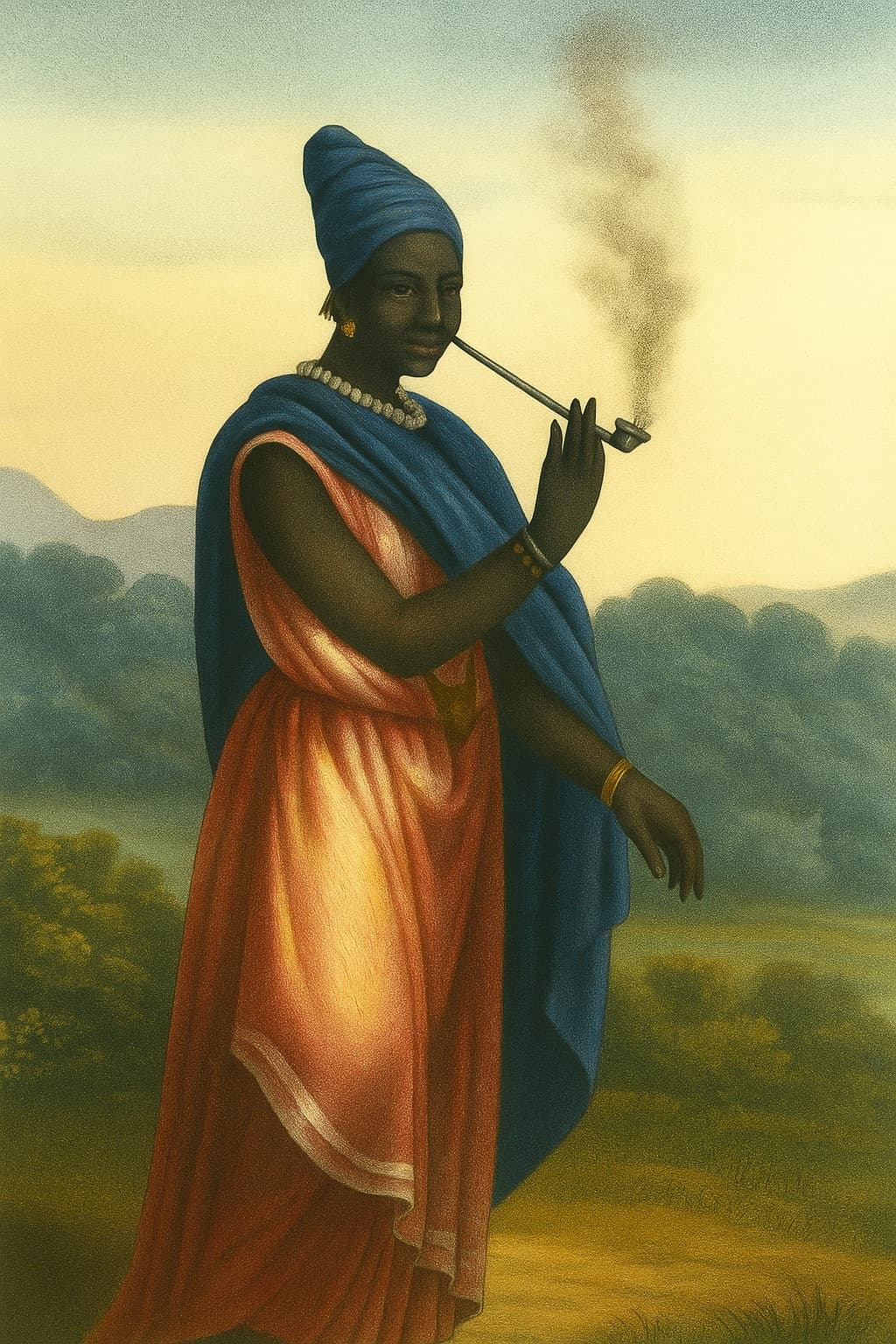
Ndaté Yalla Mbodj was the last queen of Senegal's Waalo kingdom, renowned for her fierce military and political resistance against French colonial forces from 1846 to 1855. Her legacy endures as a powerful symbol of African sovereignty and female leadership.

SunulifeMon, Jun 30, 20257min read
Ndaté Yalla Mbodj: The Last Queen of Waalo and a Symbol of Resistance

Ndaté Yalla Mbodj (1810–1860), also known as Ndete Yalla or Ndateh Yalla Mbooj, stands as one of the most formidable figures in Senegambian history. As the last great Lingeer (Queen) of the Waalo kingdom in what is now northwest Senegal, she fiercely resisted French colonial expansion and Moorish invasions during her reign from 1846 to 1855. Her legacy as a political leader, military strategist, and symbol of African resistance against colonialism endures, celebrated through oral traditions, historical records, and modern commemorations. This article delves into her life, her reign, her resistance, and her lasting impact on Senegal and beyond.

Early Life and Background

Ndaté Yalla Mbodj was born around 1810 in the Waalo kingdom, a Wolof state located in the fertile delta of the Senegal River, a strategic region coveted for its agricultural wealth and proximity to trade routes. The Waalo kingdom, part of the broader Jolof Empire until its fragmentation in the 16th century, was a matrilineal society where women held significant political and military power. The title of Lingeer was given to royal women—mothers, sisters, or daughters of the Brak (king)—who were trained to govern and defend the kingdom. Ndaté Yalla was the youngest daughter of Brak Amar Fatim Borso Mbodj and Lingeer-Awo Fatim Yamar Khuri Yaye Mbodj, both from the influential Tedyek matriclan. Her father was known for his staunch anti-Islamic stance against jihadist movements in Senegambia, famously declaring, “A Brak should never convert to Islam.” Her mother, Fatim Yamar, was a warrior who led a resistance against Moorish raiders in 1820. During this battle, known as the Battle of Nder, Fatim Yamar and her female warriors chose death by fire over enslavement, but not before ensuring the escape of her daughters, Ndaté Yalla (aged 10) and her elder sister Ndjeumbeut Mbodj (aged 12). This early exposure to courage and sacrifice shaped Ndaté Yalla’s fierce determination. At 16, Ndaté Yalla married her cousin, Brak Yerim Mbanyik Tigereleh Mbodj, in a political alliance to strengthen the Tedyek clan’s influence. Later, she married Sakoura Barka Diop (Marosso Tassé Diop), a prince of Cayor and Koki, connecting her to other powerful Wolof families. These marriages were strategic, reinforcing her political standing and influence.

Ascension to the Throne

Ndaté Yalla ascended to the throne on October 1, 1846, in Nder, the capital of Waalo, following the death of her sister, Ndjeumbeut Mbodj, who succumbed to a pulmonary illness. Ndjeumbeut had ruled as Lingeer since 1831, navigating tensions with French colonial forces and forming alliances, such as her marriage to the Emir of Trarza to counter Moorish threats. Ndaté Yalla’s coronation marked her as the last great queen of Waalo, a role she embraced with authority and resolve. As Lingeer, Ndaté Yalla governed with the support of the royal council, asserting her sovereignty in a kingdom under increasing pressure from French colonial ambitions and internal dissent. The Waalo’s strategic location near the Senegal River made it a target for French expansion, as they sought to control trade routes and establish forts. Ndaté Yalla, trained in both governance and warfare, was prepared to defend her kingdom’s autonomy.

Resistance Against Colonialism

Ndaté Yalla’s reign was defined by her unyielding resistance to French colonization, particularly under the administration of Louis Faidherbe, appointed colonial governor of Senegal in 1854. Her defiance began early, as she challenged French encroachments on Waalo’s territory and resources. One of her first significant acts was opposing the free passage of Sarakolé (Soninke) traders supplying Saint-Louis with cattle, asserting her control over trade routes. In a letter to the French governor in 1847, she declared, “We guarantee and control the passage of cattle in our country and we will not accept it the other way.” Her audacity escalated in 1850 when she banned European trade in Waalo’s backwaters and asserted her rights over the islands of Mboyo and Sor (modern-day Saint-Louis). In a letter to the governor, she wrote, “The goal of this letter is to let you know that the island of Boyo belongs to me, from my grandfather down to me today. There is nobody who can claim that that country belongs to them; it is to me only.” She further provoked the French by orchestrating raids around Saint-Louis, refusing to compensate for damages as demanded. These actions underscored her refusal to submit to colonial authority. In February 1855, Faidherbe launched a military expedition against Waalo, deploying 15,000 troops armed with advanced weaponry. Ndaté Yalla led a formidable army, including a renowned women’s brigade, but the technological disparity proved insurmountable. She reportedly addressed her warriors, saying, “Today we are invaded by the conquerors. Our army is in disarray. The tiédos (warriors) of Waalo, valiant as they are, have almost all fallen to the enemy’s bullets. The invader is stronger than us, I know, but should we abandon Waalo to the hands of foreigners?” Despite her leadership, Waalo’s forces were defeated, marking the beginning of the kingdom’s decline.

Legacy and Influence

Ndaté Yalla Mbodj died in 1860 in Dagana, the former capital of Waalo. Her son, Sidya Ndaté Yalla Diop, continued her resistance. Captured at age 10 by Faidherbe and educated in Saint-Louis and Algeria, Sidya rejected French assimilation, adopting traditional attire and leading an insurrection in 1869. Betrayed and exiled to Gabon, he died in 1878 at age 30, cementing the family’s legacy of defiance. Ndaté Yalla’s resistance made her a symbol of African sovereignty and gender equality. In a matrilineal society, she embodied the power of women trained to lead and fight. Her image, captured in a 1850 sketch by Abbé David Boilat, depicts her smoking a ceremonial pipe, surrounded by over 500 richly dressed women, princes, and warriors—a testament to her authority. A bronze statue in Dagana, based on this sketch, stands as a tribute, though it has weathered over time. Her story is preserved in oral traditions by griots, who celebrate her bravery through songs and storytelling. Modern Senegal honors her through institutions like the Ndaté Yalla Mbodj school in Saint-Louis and a boat-taxi named in her honor on the Dakar-Rufisque route. Sociologist Fatou Sow Sarr has called her a “symbol of equality and equity of gender in Senegal.”

Historical and Cultural Significance

Ndaté Yalla’s resistance occurred at a time when European women lacked basic rights, highlighting the strength of African matrilineal systems. Her defiance of Faidherbe and her strategic use of correspondence to assert sovereignty demonstrate her political acumen. She joins other African heroines like Nzinga of Angola and Yaa Asantewaa of Ghana in the pantheon of anti-colonial resistance. However, her legacy was long overshadowed in mainstream histories, only recently revitalized by historians and sociologists. In Dagana’s schools, her story is now taught to inspire young girls to aspire to leadership, challenging gender stereotypes in modern Senegal. Her life underscores the resilience of African women in the face of colonial oppression and serves as a reminder of the complex interplay of power, gender, and resistance in 19th-century Africa.

Conclusion

Ndaté Yalla Mbodj was more than a queen; she was a warrior, a strategist, and a symbol of unyielding resistance. Her leadership in Waalo’s final stand against French colonization cemented her as a heroine of Senegambian history. Through her courage, she preserved the dignity of her people and inspired future generations. As Senegal continues to rediscover her legacy, Ndaté Yalla remains a powerful emblem of African sovereignty, female leadership, and the enduring fight for freedom.
Discussion

How does Ndaté Yalla Mbodj’s legacy challenge contemporary narratives about women’s roles in precolonial African political and military leadership?