Taste & Style
Sunulife · Mon, Apr 27, 2026 · 2 min read
The Weaver’s Gesture: When the Table Tells Africa’s Story
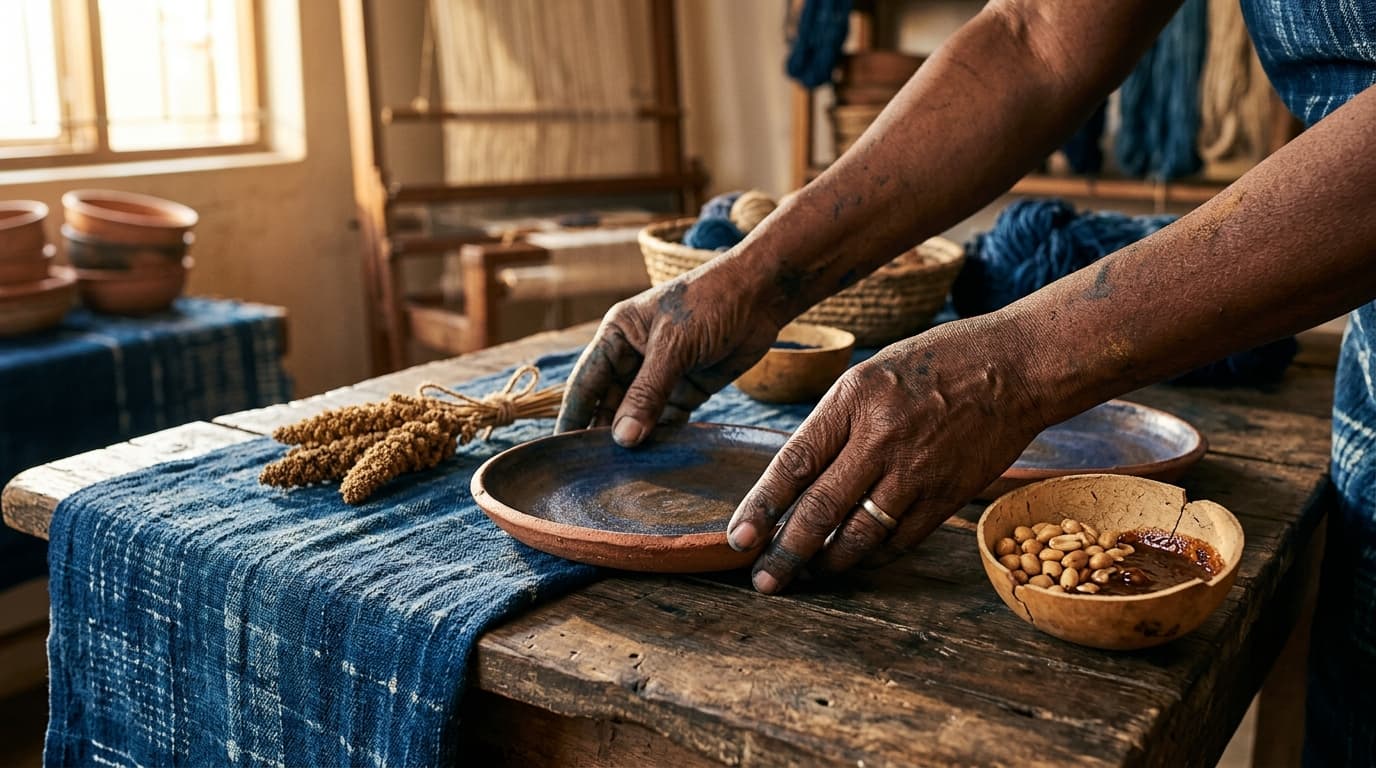
There is, in the weaver's gesture, a slowness that defies our age. Their fingers run across cotton threads, knotting and releasing them, creating patterns that tell stories of terroir and migration. Today, this ancestral movement finds an unexpected echo on our tables. For African gastronomy, long reduced to its flavors, is now asserting itself as a total art — an aesthetic where the cloth, the plate, and the dish converse in a symphony of materials. In Senegal, the tradition of thiéboudiène is not limited to the slow cooking of rice and fish. It begins long before, in the choice of the pagne that dresses the table. The women of Saint-Louis, guardians of centuries-old knowledge, unfurl wax fabrics in the colors of the ocean and the sunset. Each pattern has a name: 'The Bride's Tears,' 'The Wind That Lifts the Dust.' These textiles are not mere tablecloths; they are the sensitive map of a territory, the narrative of a community. This table aesthetic, carried by a new generation of designers and chefs, draws from the archives of forgotten materials. Raffia, braided into placemats, recalls the gestures of harvesting and drying. Iroko wood, carved into bowls, bears the striations of time. The pottery of Sejnane, with its geometric motifs, invites us to drink bissap from vessels that have crossed centuries. Each object is a living archive, a fragment of history that we touch, that we taste. But this renaissance is not mere nostalgia. It is a powerful reclamation, a response to decades of cultural erasure. When you place a terracotta plate on a bogolan cloth, you assert that Africa is not an exotic backdrop but a civilization of taste and gesture. Diaspora chefs, from Dakar to Brooklyn, reinvent rituals: foutou is served in carved calabashes, smoked attiéké on banana leaves, mafé in calabash bowls. Each dish becomes a performance, a declaration.