Sunulife · Fri, May 29, 2026 · 4 min read
The Silences of Ndar Street

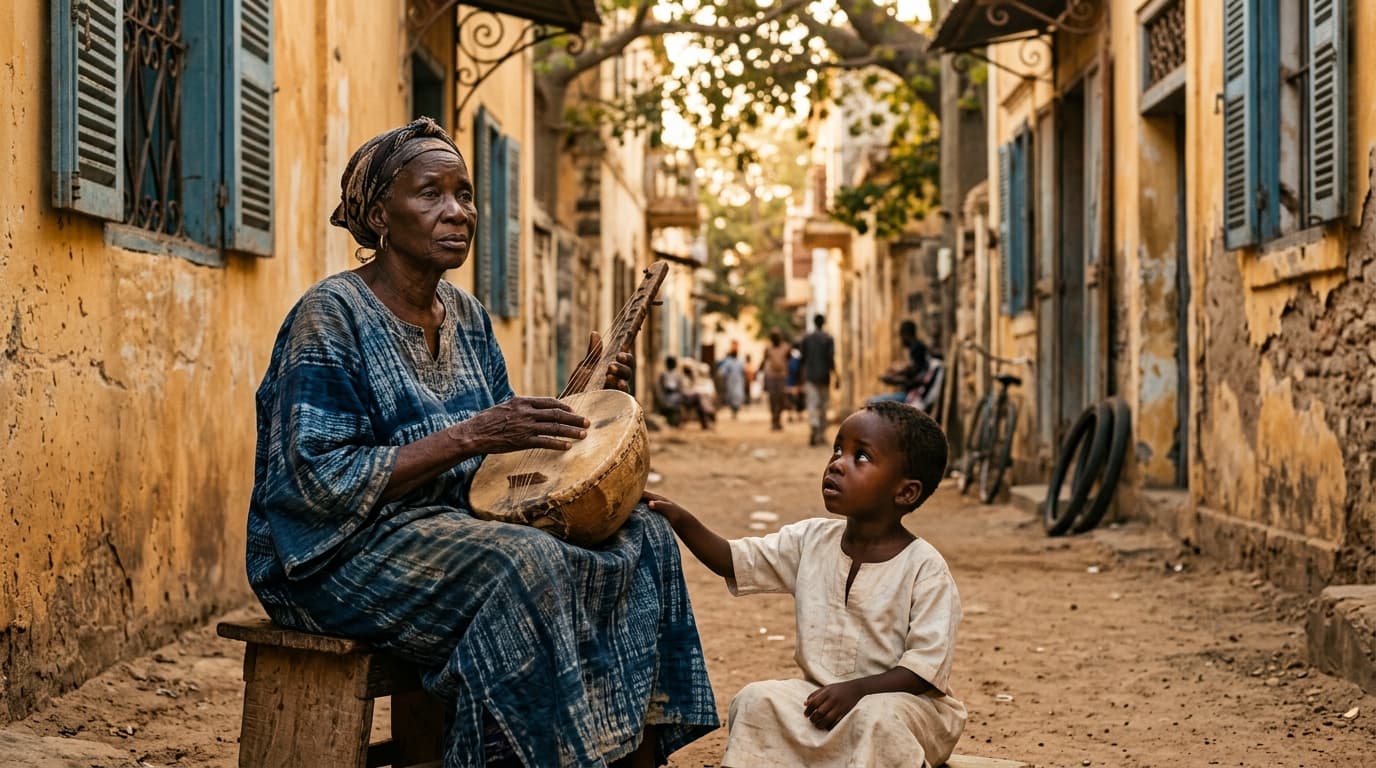
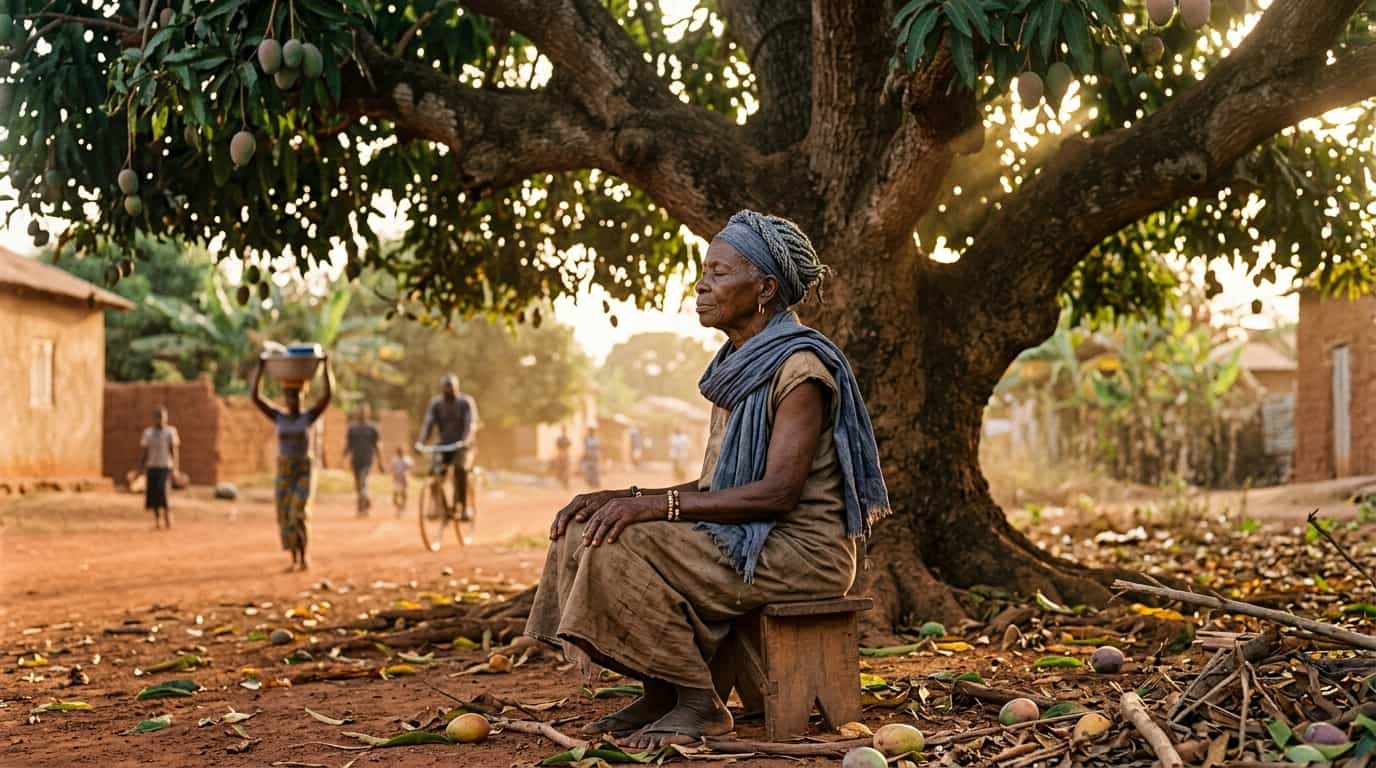
In Saint-Louis, Senegal, Ndar Street goes nowhere. It ends in a dead end at Mame Diarra's blue door. For thirty years, every evening, she brings out her white plastic chair, places it on the threshold, and stares at the end of the street. The neighbors say she is waiting for her son, Ousseynou, who left for Dakar one morning in 1992 to look for work and never returned. No one knows what happened. The police never investigated. The family eventually accepted the absence, but Mame Diarra did not. She waits. She waits like one prays: without proof, perhaps without hope, but with a constancy that defies meaning. Tonight, the street is quieter than usual. Children play football with a deflated ball, their shouts ricocheting off the ochre walls. A woman washes clothes in a basin, the rhythmic sound of scrubbing against the board. Mame Diarra sits, hands folded on her knees, her gaze fixed. Her body is an archive of waiting: sloping shoulders, wrinkles around her eyes like paths worn by looking. Suddenly, a boy of about eight stops in front of her. His name is Babacar, he lives three houses away. He looks at her for a long time, then asks: 'When is Tonton Ousseynou coming back?' The question falls into the silence like a stone into water. The other children stop playing. The woman washing clothes looks up. Mame Diarra does not answer. She looks at Babacar, and her eyes seem to pierce through the child, through the street, through the years. What no one knows is that Mame Diarra received a letter three weeks ago. A letter without a stamp, slipped under her door. Inside, a photograph of Ousseynou, aged, standing in front of a shop in Marseille. On the back, hesitant handwriting: 'Mama, I am alive. I am coming back soon. Forgive me.' She told no one. She hid the photo under her mattress. Every night, she takes it out, looks at it by candlelight, and cries in silence. But tonight, Babacar's question opens a crack. She feels that time is about to fold. She rises slowly, goes inside, and returns with the photo. She shows it to Babacar. 'He is alive,' she says, her voice barely trembling. 'He is coming back.' The words float in the air like incense smoke. The children draw near. The woman abandons her washing. Even old Samba, napping on a mat, opens one eye. What happens next is a whisper that travels down Ndar Street, then the neighborhood, then the city. They say Mame Diarra saw her son in a dream, that he spoke to her, that he is arriving on the next boat. The rumors grow, transform, become legend. And Mame Diarra, for the first time in thirty years, does not bring out her chair in the evening. She stays inside, preparing thieboudienne, sweeping the courtyard, changing the sheets in Ousseynou's room, untouched since his departure. Two weeks later, a bush taxi stops at the end of Ndar Street. A man gets out, his legs heavy, his face marked by life. He carries a cardboard suitcase and a searching gaze. The children run toward him. Babacar shouts: 'Tonton Ousseynou!' The blue door opens. Mame Diarra appears, old, fragile, but upright. She does not run. She walks slowly toward him, and when she reaches him, she raises her hand and slaps him. Then she kisses him. The whole street weeps. That evening, the white plastic chair remains empty. But Ndar Street, for the first time, is full of sounds of laughter, tears, words catching up. The thirty-year silence has finally broken.