Sunulife · Thu, Apr 2, 2026 · 5 min read
The Nuts of Memory

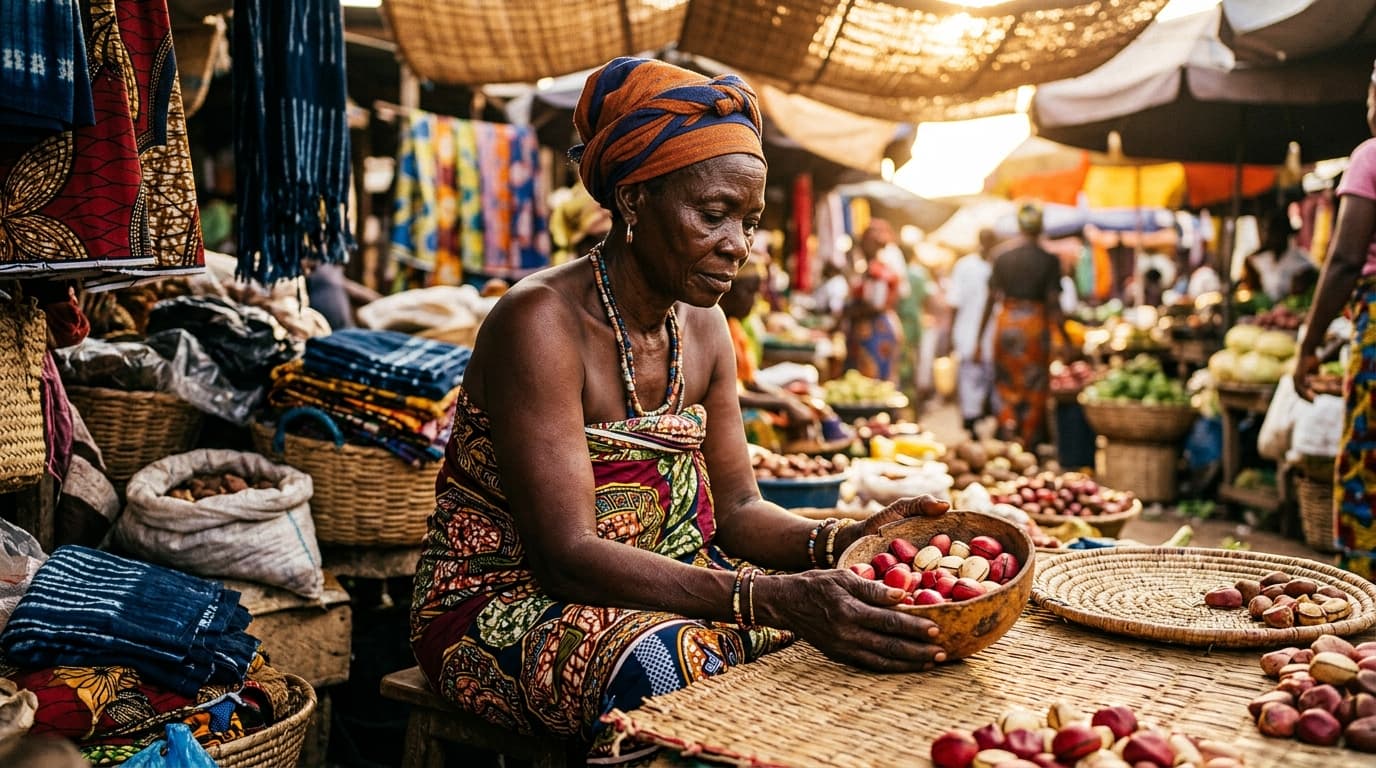
The Adjamé market smelled of damp earth, hot spices, and ancient sweat. Aminata, twenty-eight, her hands calloused from ten years spent sorting, cracking, and selling kola nuts, no longer saw the beauty in her merchandise. To her, they were objects: the red ones, bitter, for ceremonies; the white ones, sweeter, for business deals. Tools of transaction, nothing more. Until that November morning when an old woman, her eyes as deep as desert wells, stopped in front of her stall. The woman did not speak at first. She took a red nut, brought it to her nose, closed her eyes. 'Do you smell the ocean?' she finally asked, her voice rough like gravel underfoot. Aminata shook her head, embarrassed. 'I smell the bitterness.' The old woman smiled, a sad smile that seemed to traverse centuries. 'Bitterness is the ocean. It's the salt of tears shed during the crossing. Your nuts, child, they come from Guinea. From the forest where my great-grandparents were captured.' This encounter triggered something in Aminata. She began to look at her nuts differently. No longer as products, but as archives. Every crack in the bark seemed to her like a map; every vein, a path of escape or deportation. She started questioning the suppliers, elderly men who brought sacks from the North, from deep within Côte d'Ivoire, from Ghana, sometimes from distant Nigeria. They told her fragments: how kola accompanied slaves in the holds, how it served as currency in exchange for lives, how it was chewed for courage before revolts. One afternoon, a delivery man confided a family secret. His own grandmother, before dying, had bequeathed him a wooden box containing dried kola nuts, blackened by time. 'She said each nut represented an ancestor who left by sea. That they must be kept so they are not forgotten.' Aminata felt a shiver run through her. She went home, to her small apartment in Yopougon, and took out an old photo of her mother, who died when she was ten. Her mother also sold kola. She suddenly remembered a story, whispered half-heartedly one stormy night: a great-great-uncle, who left one morning to sell nuts at the port, and never returned. She decided to leave. Not far, at first. To Grand-Bassam, the former capital, where the stones of the slave trading posts still breathe pain. There, sitting facing the ocean, she chewed a red nut. The bitterness flooded her mouth, then came a strange residual sweetness. And in that sweetness, images: chained hands, songs in forgotten languages, the creaking of sailing ships. She then understood that kola was not just a product. It was a witness. A silent witness to pacts sealed and broken, lives exchanged, resistance that persisted in the very taste of the seed.

Back in Abidjan, Aminata transformed her stall. She no longer just sold nuts; she told their stories. To each customer, she offered a fragment of a tale: 'This nut comes from the sacred forest of Kissidougou, where women hid to escape raids.' Or: 'This one crossed the desert with Tuareg caravans; it was traded for salt and freedom.' People listened, fascinated. Some cried. A man, a diasporan returned from the United States, told her: 'I have never felt anything so African. It's like chewing my own history.'
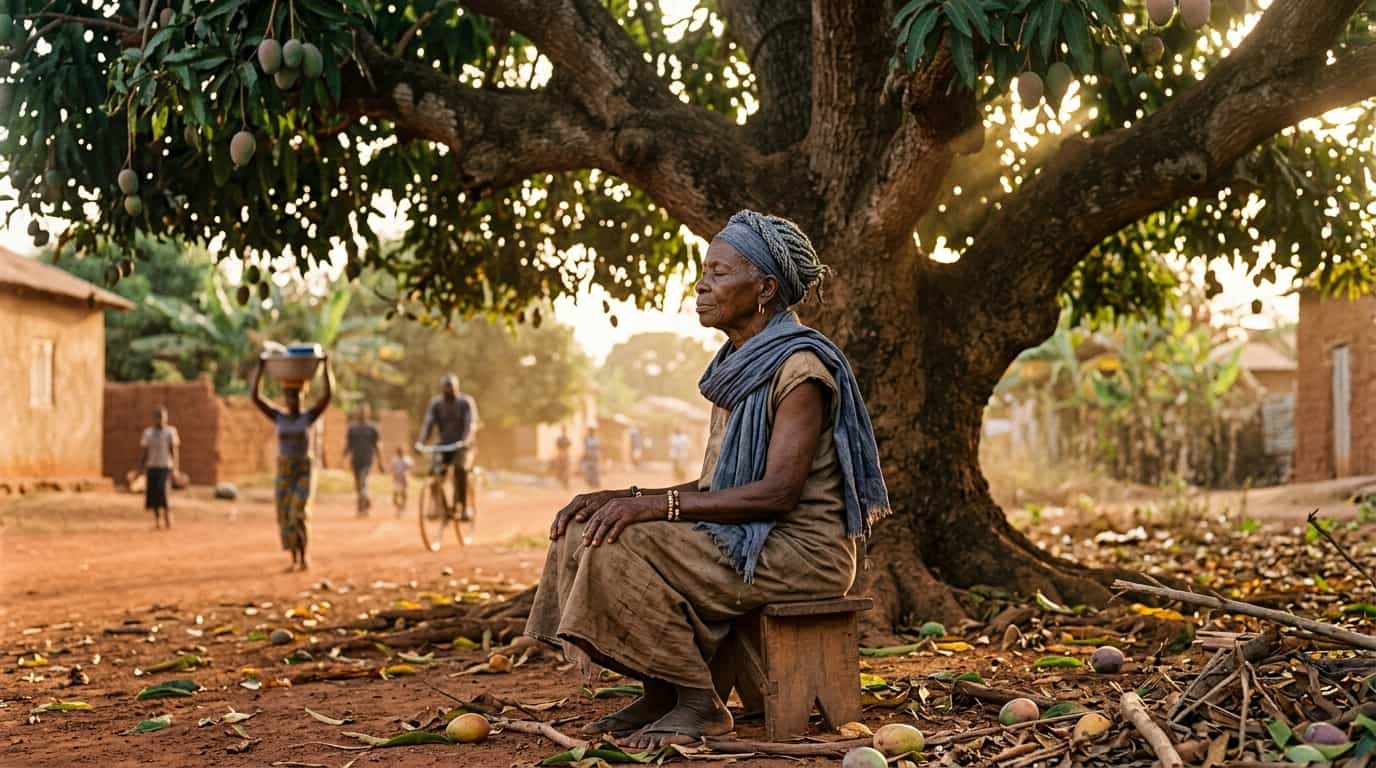
One day, the old woman returned. She placed on the stall a small white nut, almost translucent. 'This one is for you,' she said. 'It comes from my garden, in Senegal. It has known neither chains nor ocean. It is sweet, like the future you are building.' Aminata took it, moved. She realized her work was not only to remember the past, but to transform it into something living, nourishing. Kola had been a tool of the slave trade; she was making it a tool of transmission, of healing.
Now, when she cracks a nut, she hears more than the dry snap of the bark. She hears voices. Whispers across the ages, prayers, laments, hopes. And in the noisy Adjamé market, amid the smells of fried fish and ripe mangoes, Aminata, kola seller, has become a guardian of memory. Her red and white nuts are no longer mere seeds. They are pieces of soul, compasses for those who have lost their north, tangible proof that even in the deepest bitterness, a sweetness remains, persistent, like life itself.
And sometimes, in the evening, when the market falls asleep, she chews a nut, closes her eyes, and travels. She crosses seas without taking a boat, visits forests without walking, rediscovers faces she has never seen but recognizes in her blood. Kola has become her vessel, her archive, her burden and her gift. And in that taste both sharp and sweet, she has found what she was seeking without knowing it: the very flavor of her identity, complex, resilient, and profoundly, irreducibly African.