Sunulife · Wed, May 20, 2026 · 4 min read
The Song of the Dunes

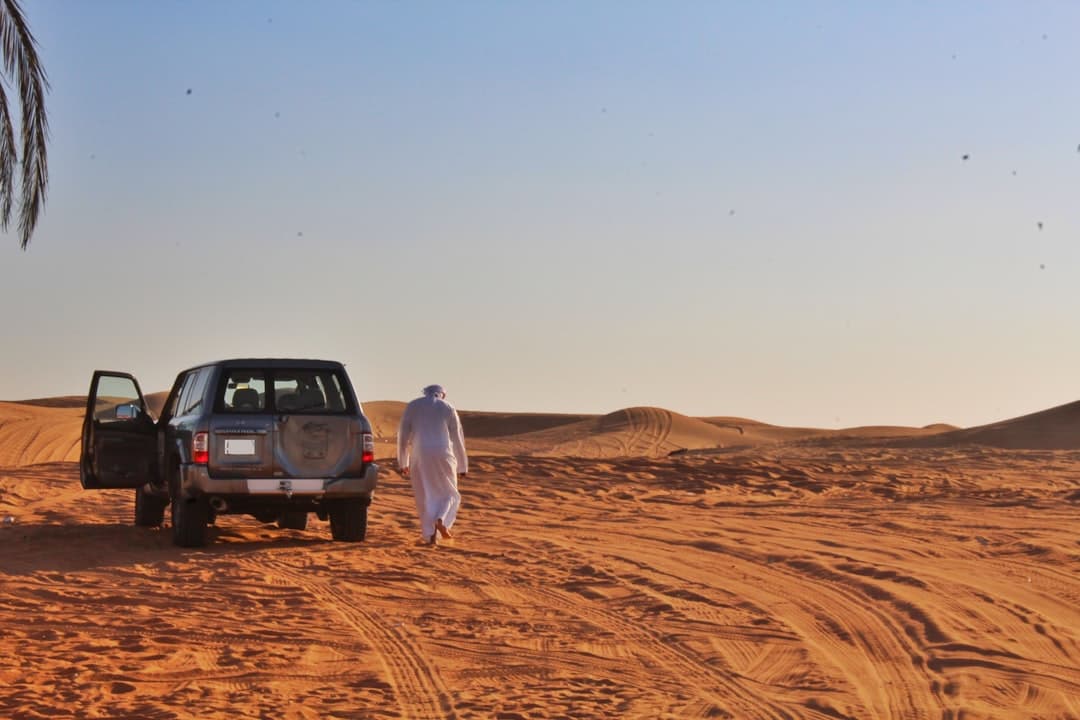
Dawn breaks over Chinguetti, and the light is an incantation. It slides across the dry-stone walls, setting them ablaze with deep ochre, then lingers on the sand, turning it into an ocean of liquid gold. Here, time is not measured by watches. It is measured by the wind, which has sculpted the dunes for centuries, and by the stars, which once guided caravans laden with salt and manuscripts. I came seeking silence, and I found a symphony. We depart before dawn, when the air is still sharp and shadows stretch long. My guide, a man with honey-colored eyes named Sidi, loads provisions onto two camels. He laughs at my clumsy steps in the sand. 'Here, you walk like water,' he says, 'slowly, yielding to the slope.' His voice is a balm. We leave the old town behind—its narrow alleys, its carved wooden doors—for a world where the horizon is no longer a line but a promise. The first hours are an ordeal. Sand seeps into everything: shoes, hair, thoughts. But gradually, the body adapts. The rhythm becomes that of walking, an ancient cadence. The silence, initially deafening, fills with minute sounds: the rustle of fabric, the breathing of beasts, the crunch of sand underfoot. And then there is the wind. It sings. Sometimes it is a lament, sometimes a murmur, sometimes a laugh. The Tuareg say the wind carries the voices of ancestors. I am inclined to believe them. At noon, we stop in the shade of a sandstone cliff. Sidi brings out tea, sugar, a small kettle blackened by fire. Mint tea is a sacred ritual here. The first glass is bitter as life, the proverb goes, the second sweet as love, the third light as death. We drink in silence, facing the vastness. The dunes ripple to the horizon, their crests tracing perfect curves. The sky is a blue so pure it seems painted. In the afternoon, we reach a rocky plateau where petroglyphs tell of another era. Giraffes, elephants, men with bows—a verdant world, now vanished. I place my hand on the sun-warmed stone. What I feel is vertigo. How many hands before mine? How many gazes have contemplated these same figures? The desert is an open book, but one must know how to read the sand. Evening finds us camped in a hollow between two dunes. The sky turns purple and orange, then the stars emerge, one by one, until they form a canopy so dense it seems to press down on our shoulders. Sidi lights a small fire. The flames dance, and with them, stories. He speaks of the caravans of old, of scholars who crossed the desert with entire libraries on camelback. 'Knowledge was their only treasure,' he says. 'Today, people seek black gold. But the true gold is this silence, this freedom.' I lie down on the sand, still warm, and let the sky swallow me. There is no longer a boundary between me and the universe. The wind blows, carrying away my thoughts. I understand then that the desert is not a void. It is a space of fullness, an invitation to shed the superfluous. Here, one owns nothing, yet is rich in everything. The next day, we head back to Chinguetti. The town, seen from afar, seems to float on a mirage. The stone minarets cut against the sky. I know I will return to noise, the calls to prayer, the tourists, the merchants. But something has shifted within me. I have walked in the footsteps of the ancients, I have listened to the song of the sand. And that song, I will carry it with me for a long time, like an inner compass.