Journeys
Sunulife · Fri, May 29, 2026 · 2 min read
The Last Shore of the Turtles
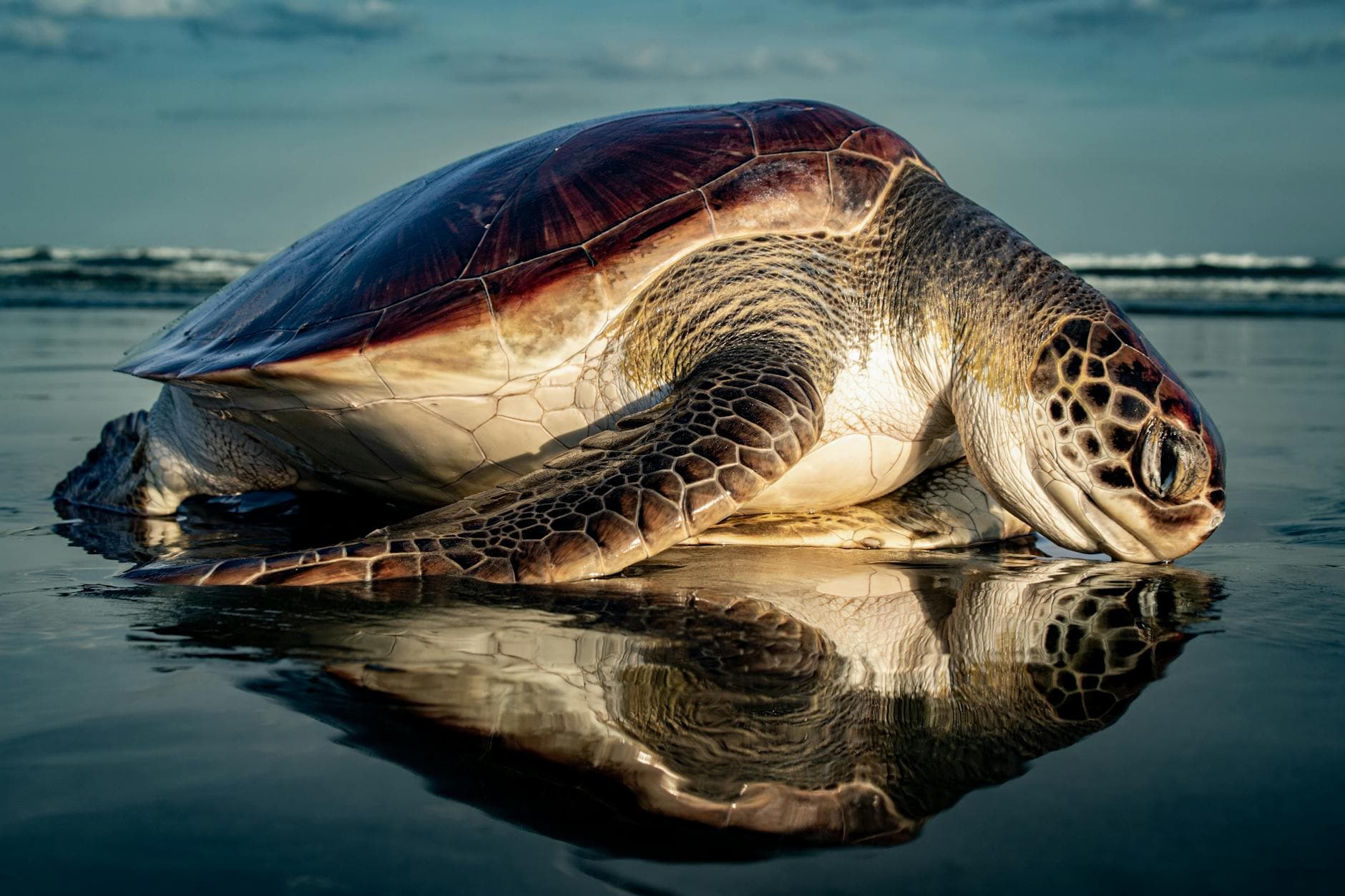
You have to walk a long time on the beach of Joal-Fadiouth to understand what silence means. Here, the wind carries no city hum, no horns, no music. Only the surf, regular as a pulse, marks the darkness. The moon, nearly full, turns the waves to silver as they die at our feet. We have come to see the turtles. Our guide, Aïssatou, is a slight woman with a voice that seems to rise from the earth itself. She walks barefoot, knows every hollow in the sand, every hole left by ghost crabs. 'Tonight they come,' she says without turning. 'The sea is calm, the moon is good.' Sea turtles — loggerheads, greens, leatherbacks — travel thousands of miles to return to the beach where they were born. No one knows how they find their way. Scientists speak of magnetic fields, scents, currents. The fishermen of Joal say the turtles have a memory older than humans. That they remember Africa before borders, before ships, before time. We sit on the cold sand. Aïssatou signals us to stop talking. The wait lasts an hour, maybe two. Then, in the distance, a dark mass emerges from the foam. Slowly, with an almost painful grace, the turtle hauls itself onto the beach. Its flippers dig into the sand, its heavy body leaves a track like an airplane's trail. It moves, stops, moves again. Its eyes, small and black, reflect the moon. This is a spectacle that belongs to no one. It is not made for humans. The turtle does not see us. It is elsewhere, in a state of absolute concentration. When it begins to dig t