Society

Sunulife · Tue, Mar 31, 2026 · 4min read

Between Two Worlds: Senegal's Youth and the Art of Identity Navigation
Between Two Worlds: Senegal's Youth and the Art of Identity Navigation
Favourite

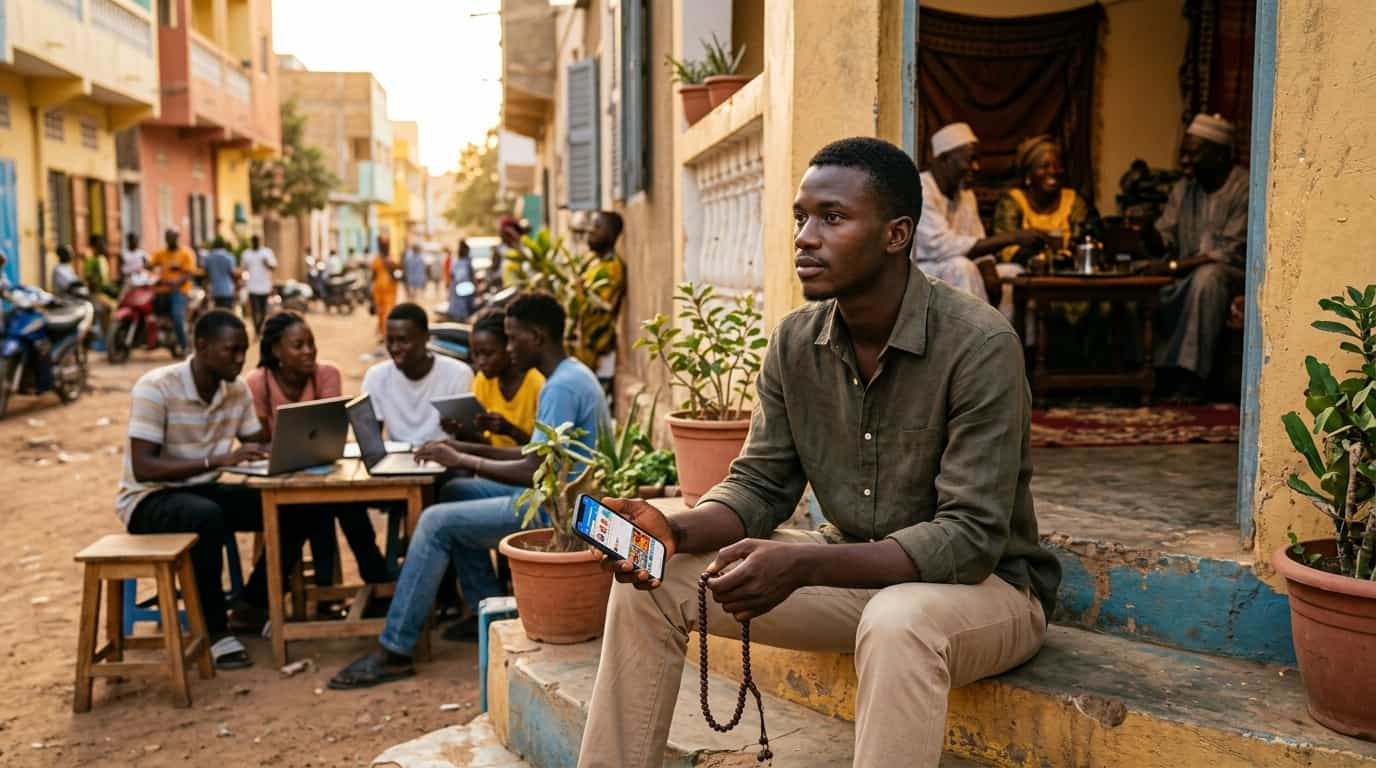
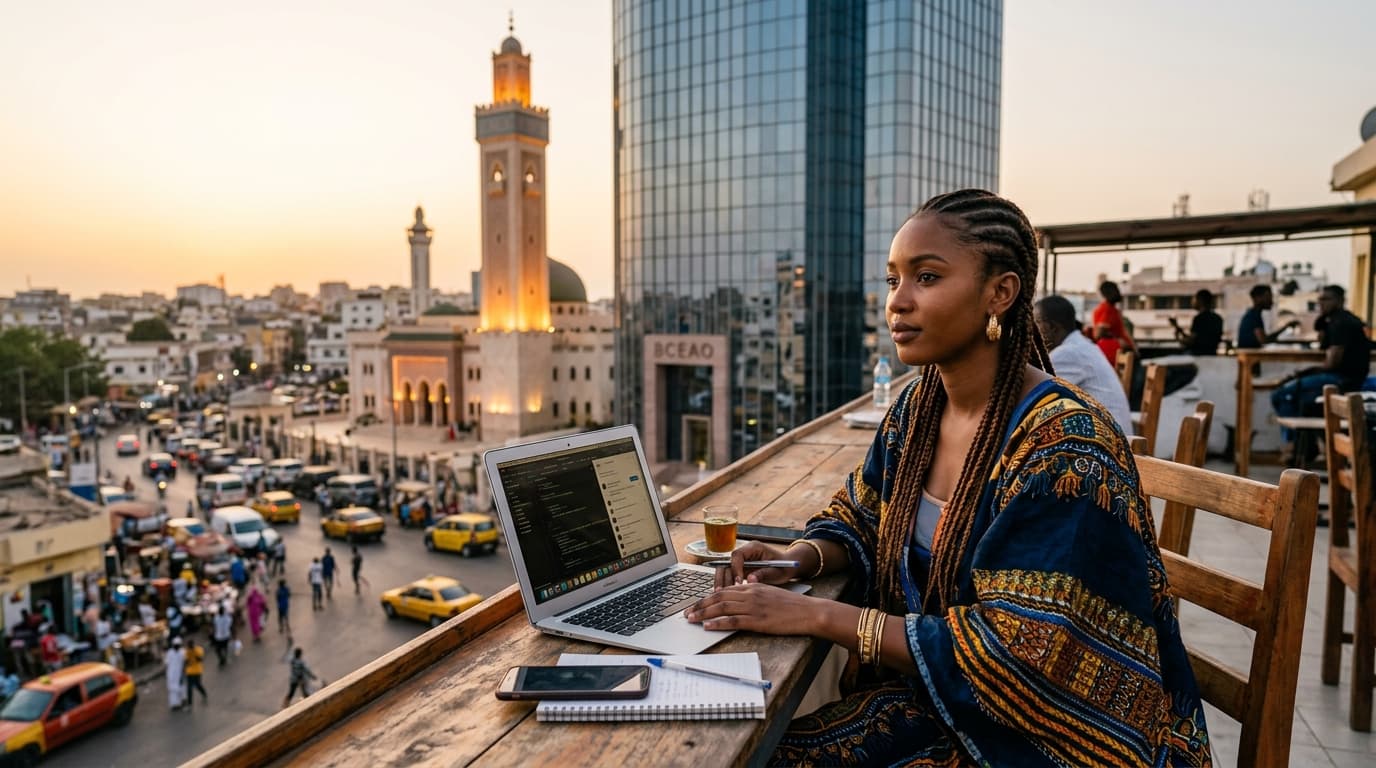
The afternoon sun caresses the ochre facades of the Médina and reflects, further on, in the blue-tinted glass of the business district. This skyline, where past and future seem to hold hands, is the daily stage for a silent yet profound tension. It manifests not in shouts, but in choices: that of Aïda, a twenty-eight-year-old engineer who wears a small gris-gris pouch under her trouser suit, an inheritance from her grandmother; that of Mamadou, a sociology student who prays five times a day but hosts a podcast where he deconstructs, with gentle firmness, the gender stereotypes perpetuated by certain Wolof proverbs. The family, that backbone of Senegalese society, is both a refuge and a permanent field of negotiation. Parents, often born in a rural Senegal or during the first tremors of independence, carry within them a model where the individual yields to the collective, where respect for elders is a categorical imperative, and where marriage and procreation are the cornerstones of fulfillment. Their children, lulled by satellite waves and global digital culture, aspire to something else: to personal achievement, to chosen love, to a delay before starting a family, time to "build themselves." This gap is not an open conflict, but a constant murmur. It is the mother who asks, every Friday, if her daughter has "met someone nice at the mosque," while she smiles and talks about her next professional certification. It is the father, proud of his son's academic success, who worries about seeing him "too alone" in his Ouakam apartment.

Religion, primarily the Sufi Islam that permeates social life, provides a reassuring framework whose interpretations are increasingly questioned. The urban youth does not challenge their faith – mosques are full of young faces on Fridays – but they engage in a dialogue with it. They question the place of women in religious space, the compatibility between spiritual precepts and a demanding career, the meaning of sacrifice during Tabaski when prices soar. They seek an Islam that accompanies their modern life rather than constraining it, an Islam of the heart and social action, sometimes in tension with the more literal or customary readings of the previous generation. Gender is perhaps the terrain where these tensions are most visible and most creative. Senegalese women, long confined to well-defined roles, are now at the forefront of this navigation. They are doctors, entrepreneurs, artists. They claim the right to public space, to speech, to fulfilling sexuality. Yet, they often do so with strategic grace, without renouncing the elegance of the boubou, the respect due to traditions, the strength of the matrilineal network. They are inventing a new femininity, borrowing from the tenacity of their mothers and the audacity offered to them by the world. Men, for their part, are torn between a model of the patriarchal provider and the emergence of a more emotional, collaborative masculinity, sometimes undermined by economic difficulties. This generation is not experiencing an identity crisis, but a synthesis in action. They do not see themselves as torn, but as bilingual: capable of speaking the language of teranga, family solidarity, and the sacred, while mastering the codes of the global economy, digital activism, and contemporary individualism. Their identity is hybrid, contextual. They carry their ancestors' names on their LinkedIn profiles. They celebrate Tamkharit with fervor and organize clean walks the following weekend. This agility is their strength and their fatigue. It requires constant psychic work, moment-by-moment vigilance not to betray either their roots or their aspirations. The challenge for Senegal is not to determine whether tradition or modernity will prevail. The challenge is to create the social, economic, and political conditions for this navigation to cease being an individual obstacle course and become a collective societal project. It is about enabling these young architects of the self to build, with materials from both worlds, a country in their image: rooted and open, pious and progressive, collective and respectful of each singularity. Their quest, far from being a sign of weakness, is perhaps Senegal's greatest resource for tomorrow.