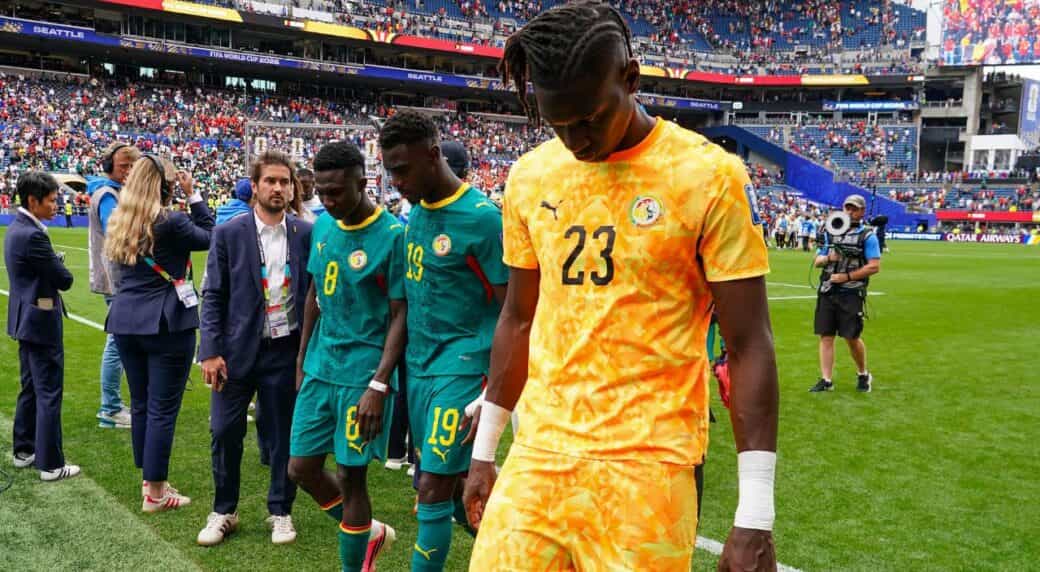
The confetti has settled on the pitch at the Prince Moulay Abdellah Stadium in Rabat, and the record books will show that Senegal defeated Morocco 1-0 to claim the 2025 Africa Cup of Nations title. It was a victory of grit, tactical discipline, and immense mental fortitude, secured by a 94th-minute extra-time strike from Pape Gueye.
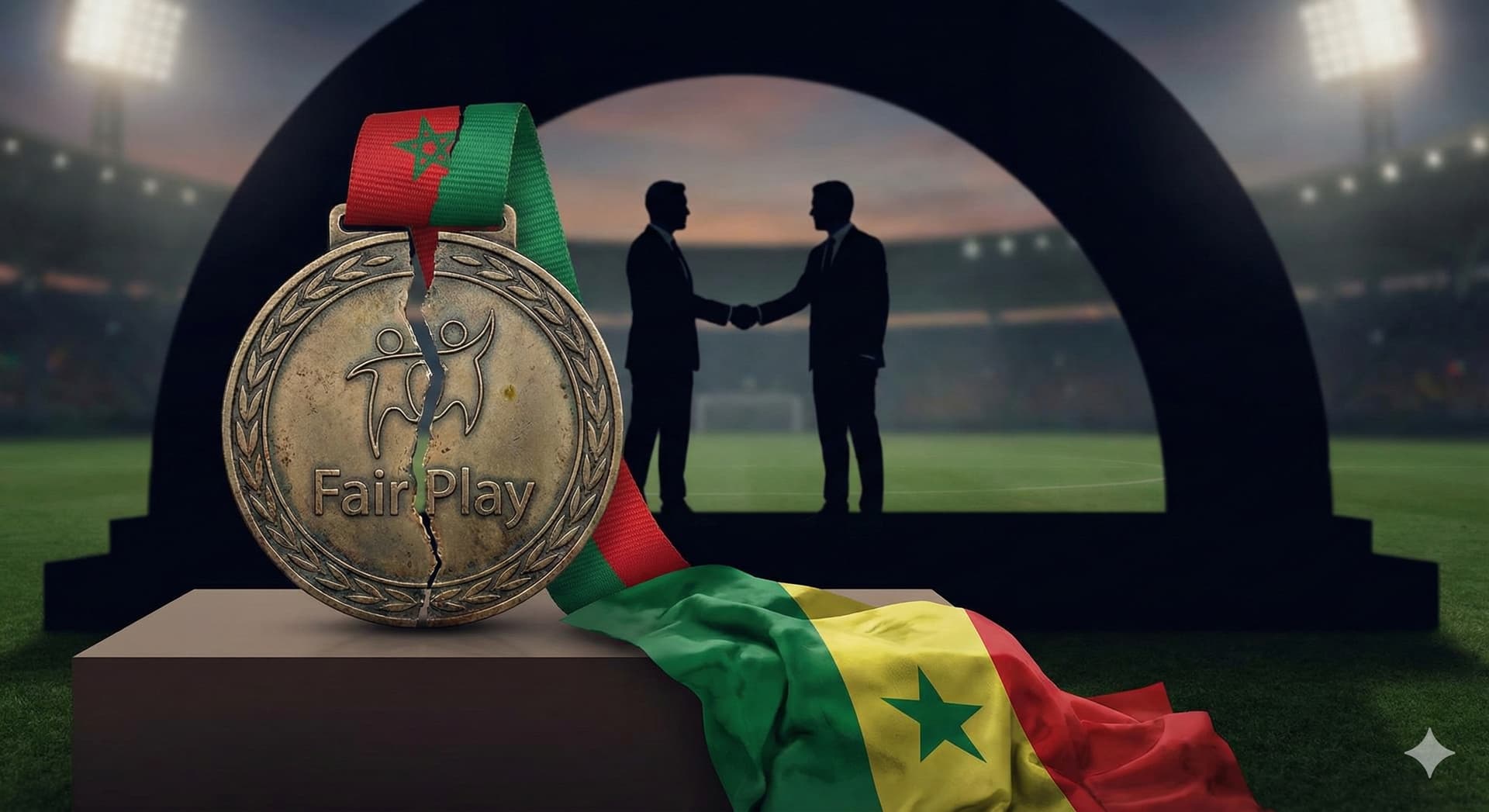
But as the Lions of Teranga lifted the trophy, a secondary presentation took place that threatened to turn the continent’s premier sporting event into a theater of the absurd. The Confederation of African Football (CAF) announced the winner of the tournament’s "Fair Play" award: The host nation, Morocco.
For anyone who watched the friction, obstruction, and cynical gamesmanship that preceded the final whistle, this award wasn't just a consolation prize. It was a calculated erasure of the "dark arts" witnessed by millions. It signaled that host-nation disruption is no longer a violation of the spirit of the game—it is now sanctioned, and even rewarded, by the governing bodies.
The "Towel-Gate" Dossier: Sabotage as Strategy
To understand the depth of the farce, one must look past the pristine grass and into the sidelines. The controversy dubbed "Towel-Gate" will likely be remembered longer than many of the tournament's goals.
This was not the work of rogue elements. It appeared to be a systematic attack authorized from the top. Throughout the knockout stages, opposition goalkeepers were targeted.
The Semi-Final Precedent: In the semi-final against Nigeria, goalkeeper Stanley Nwabali had his hydration bottles removed and towels stolen by ball boys during critical stoppages.
The Final Escalation: In the final, Senegal’s Édouard Mendy faced the same treatment. Ball boys were seen literally wrestling towels away from him to prevent him from drying the ball before goal kicks.
The Violation: This is a clear breach of CAF Disciplinary Code Article 83, which holds the host association responsible for "order and security both inside and around the stadium." By failing to control their own ball boys—and arguably instructing them—the Moroccan organizers violated the principles of fair conduct outlined in Article 82.
Yet, the institutional silence was deafening. When world-class talents like Achraf Hakimi were seen participating in these antics, it set a "top-down" standard. By failing to intervene, CAF implicitly endorsed a strategy where ball boys become the host’s 12th man—not through vocal support, but through logistical sabotage.
The Double Standard: Condemnation vs. Protection
Perhaps the most jarring aspect of the post-final fallout was the reaction of FIFA President Gianni Infantino.
When the Senegalese team staged a walk-off protest in extra time—following a highly controversial penalty awarded to Morocco (which Brahim Díaz subsequently missed)—Infantino was swift to the microphone. He labeled the scenes "unacceptable," framing the Senegalese protest as a breakdown of discipline.
Yet, where was the outrage for the 90 minutes of provocation that precipitated it?
Infantino’s selective morality highlights a troubling dynamic. Senegal’s walk-off was not a tantrum; it was the only remaining tool for a team being systematically squeezed by security failures and officiating anomalies.
This protectionism is not new. It follows a disturbing pattern established in August 2025, following the Women's AFCON (WAFCON). After Morocco lodged complaints regarding their loss, CAF Referees Director Désiré Noumandiez Doué was quietly dismissed. This sent a chilling message to every official at the men's AFCON six months later:
Rule against the host, and you lose your job.
The Money Trail: Why Morocco is "Too Big to Fail"
To understand why a "Fair Play" award was handed to a team that engaged in towel-wrestling, we must look at the balance sheet. The reality is that for FIFA and CAF, Morocco is not just a member association; it is the financial engine of African football.
The "Super-Minister" at the Helm
The central figure in this ecosystem is Fouzi Lekjaa. He is a "unicorn" in football administration: simultaneously the President of the Royal Moroccan Football Federation (FRMF), a Minister Delegate in charge of the Budget for the Moroccan government, and a member of the FIFA Council.
When the man controlling the national purse strings also sits at the top table of global football, the lines of conflict of interest vanish. He has solidified his influence by chairing CAF's Finance Committee, effectively holding the keys to the continent's football treasury.
Source:
Fouzi Lekjaa’s Dual Roles in Government and FIFA
The 2030 Imperative
FIFA has a massive stake in Morocco's image. With Morocco set to co-host the Centennial 2030 World Cup alongside Spain and Portugal, Infantino cannot afford for Rabat to look like a chaotic venue. The narrative must be one of "world-class hosting."
Acknowledging the "dark arts" of the final would tarnish the brand of the 2030 co-host. Awarding them "Fair Play" is a PR move to sanitize the record. With $1.4 billion committed to stadium upgrades, FIFA is prioritizing the protection of its future investment over the integrity of the current match.
Source:
Morocco's $1.4 Billion Stadium Plan for 2030 World Cup
Following the Money (The FIFA Forward Data)
The financial entanglement is explicit. CAF is heavily dependent on FIFA grants to survive.
FIFA Forward 3.0: The current cycle provides up to $8 million per member association over four years for operational costs and projects. However, the zonal and regional funding that keeps CAF afloat is discretionary.
"Hotel Diplomacy": Morocco acts as a "donor state" to other African nations. Through the FRMF, they host training camps for over a dozen African national teams at the Mohammed VI Complex, often free of charge. In the opaque world of CAF voting, this generosity buys silence. When you are paying for your opponent's flight and hotel, they are less likely to complain when your ball boys steal their towels.
Conclusion: A Victory for Integrity, A Loss for Governance
Ultimately, Senegal’s victory is a miracle. It stands as a testament to a group of players who beat not just eleven opponents, but a stacked deck of logistics, officiating, and administrative hostility. They won despite the system, not within it.
However, the governance of African football has suffered a heavy defeat. By handing the Fair Play award to a team that mastered the art of disruption, and by scapegoating officials who dared to stand firm, CAF and FIFA have set a dangerous precedent.
If this trajectory continues, the AFCON risks losing its status as a legitimate sporting competition, devolving instead into a scripted "Host Award" ceremony where the football is merely a backdrop for political maneuvering. The world was watching Rabat, and while they saw Senegal win the cup, they saw CAF lose its soul.