
Perspectives

Never Outshine the Master: Why Robert Greene’s First Law of Power Predicted Ousmane Sonko’s Dismissal Months Before the Decree Was Read

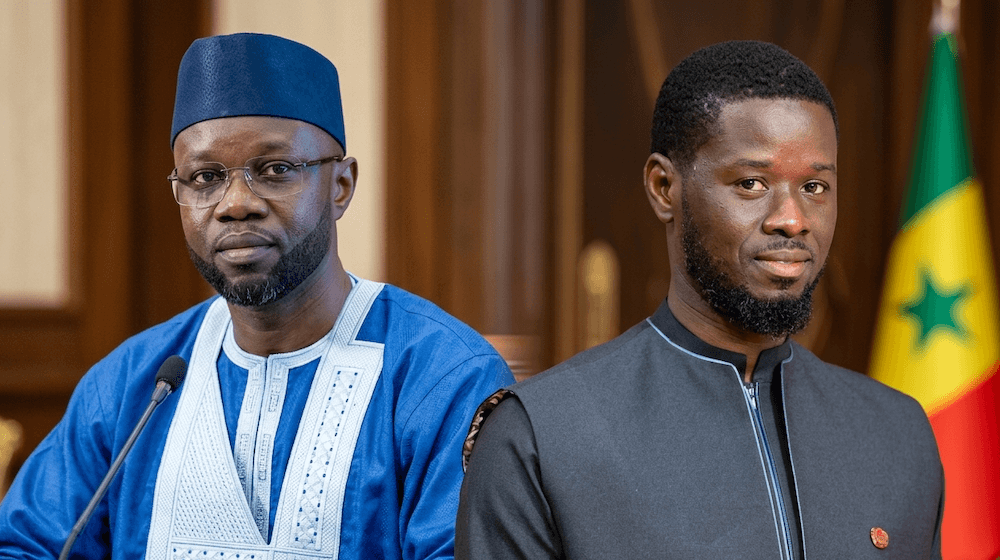
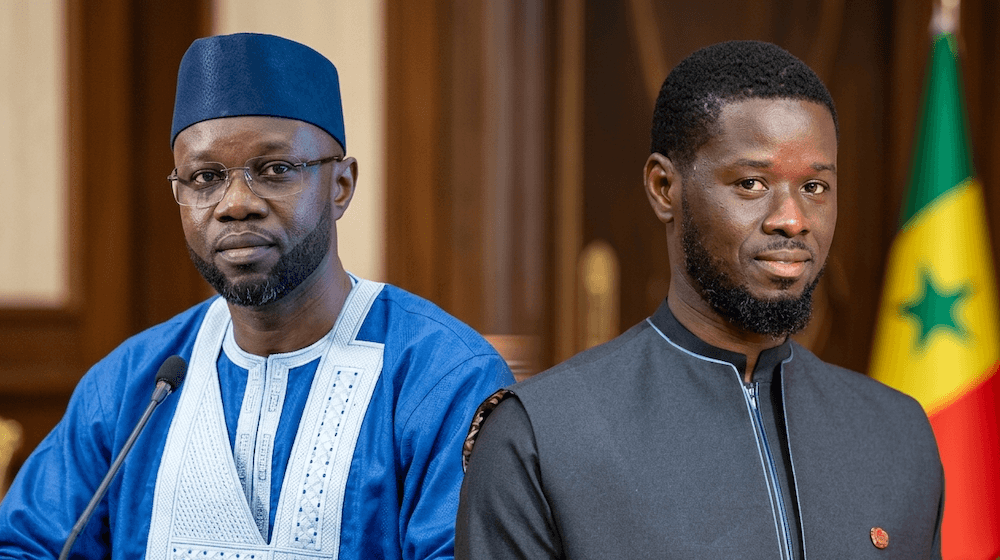
Robert Greene's first law of power—Never Outshine the Master—predicted Ousmane Sonko's dismissal by President Faye months earlier. Sonko repeatedly outshone Faye in popularity, rhetoric, and defiance, violating the law so thoroughly that his firing became inevitable, not surprising.
SunulifeSat, May 23, 202620min read
Never Outshine the Master: Why Robert Greene’s First Law of Power Predicted Ousmane Sonko’s Dismissal Months Before the Decree Was Read

The Decree Greene Would Have Forecast

There is a small library of books that ambitious politicians keep on their shelves but rarely admit to having read. Machiavelli's The Prince is on it. Sun Tzu's Art of War is on it. And since 1998, Robert Greene's The 48 Laws of Power has occupied a particular position on that shelf — equal parts manual, mirror, and warning. The book has been banned in some prisons, gifted between rappers and hedge fund managers, and quietly consulted by operators who would rather not be seen consulting it. Open the book to page one. Law 1 is the first thing you read. Never Outshine the Master. Always make those above you feel comfortably superior. In your desire to please and impress them, do not go too far in displaying your talents, lest you accomplish the opposite — inspire fear and insecurity. Make your masters appear more brilliant than they are, and you will attain the heights of power. On the evening of May 22, 2026, President Bassirou Diomaye Faye dismissed Prime Minister Ousmane Sonko by decree and dissolved the entire government. Senegalese commentators have spent the days since searching for causes — the IMF impasse, the fuel subsidy quarrel, the parliamentary tensions, the personal grievances. All of these are real. But none of them are the cause. They are the surface effects of a deeper, far older mechanism. Sonko did not lose the prime ministry because he picked the wrong policy fight. He lost it because, for nearly two years, he had been violating Law 1 in a manner so visible, so continuous, and so structurally dangerous that anyone with Greene's book on their shelf could have circled the date in advance. This article is not about whether Sonko was right or wrong on the merits. It is about the law of power he could not stop breaking, and why the firing was, in the cold geometry of authority, the only possible move left to a president who wanted to remain one.

What Law 1 Actually Demands

Greene's first law is widely misunderstood. People read it as a simple rule about flattery — don't make the boss look bad — and treat it as the kind of advice you give to an enthusiastic junior employee. That reading misses the depth of what Greene is actually describing. Law 1 is a law about managing the master's interior state. The subordinate's job is not merely to avoid open insult; it is to actively curate the master's experience of his own superiority. The master must feel, in every interaction, that he is the central intelligence in the room — wiser, more decisive, more legitimate than anyone in his orbit. This is true even when, perhaps especially when, he is not. The reason Greene insists on this is grounded in a brutal observation about power: masters who do not feel comfortably superior become dangerous, because the only way to recover the feeling is to remove the source of the discomfort. This is not a moral claim. It is a mechanical one. A king surrounded by ministers who plainly outclass him will, sooner or later, eliminate one of them — not because he hates them, but because eliminating one of them is the only way to restore the psychic balance the throne requires. Greene illustrates the law with the story of Nicolas Fouquet, finance minister to the young Louis XIV. Fouquet was brilliant, charming, immensely wealthy, and generous in his entertainment. In 1661 he threw a party at his château so dazzling that Louis — who had been at the party — went home and ordered Fouquet's arrest. The pretext was financial irregularities. The cause was that Fouquet had, for one evening, been more magnificent than the king. Louis spent the next nineteen years making sure Fouquet died in prison. The point Greene wants you to draw from Fouquet is not that ministers should be modest. It is that the master's ego is a piece of state infrastructure. Damage it, and the state will repair itself by damaging you. A subordinate who internalizes this law learns to project subdued competence: visible enough to be valuable, never visible enough to threaten. He lets the master's ideas win in meetings. He frames his own successes as outcomes of the master's vision. He absorbs blame and deflects credit. He never, ever, lets the master walk out of a room feeling small. This is the law Ousmane Sonko was supposed to be obeying for two years. He did the opposite of every clause.

The Catalogue of Violations

Run the public record of Sonko's prime ministry through Greene's framework and a clear pattern emerges. The violations were not occasional lapses. They were a continuous broadcast. He outshone Faye in popularity. From the day of the inauguration, the polls and the street told the same story: Sonko was the figure the country actually loved. The youth chanted his name, not Faye's. The diaspora rallied to his rhetoric, not Faye's measured technocratic prose. Fouquet's party at Vaux-le-Vicomte lasted one night. Sonko's was permanent. He outshone Faye in rhetoric. Faye spoke the language of institutions; Sonko spoke the language of rupture. In a country where the political vocabulary of the last two decades had been pan-Africanist, anti-colonial, and confrontational, the contrast cast Faye repeatedly in the role of the cautious manager and Sonko in the role of the true believer. Every joint appearance reinforced the asymmetry. He outshone Faye in pace. When the prime minister announced contract renegotiations and rejected IMF conditionalities, he positioned himself as the figure of decisive action; the president, by necessity, became the figure of restraint. In the public's perception, restraint reads as weakness; action reads as authority. Sonko collected the authority points. Faye paid for them. He outshone Faye in defiance. The single most consequential sentence Sonko reportedly delivered to lawmakers — "I don't work for Bassirou Diomaye Faye, I work for Senegal" — is a Law 1 violation in chemically pure form. There is no version of that sentence in which the master walks out of the room feeling superior. It does not just outshine the master; it formally denies that the master is the master. He outshone Faye in framing. When Sonko publicly accused Faye of "a lack of authority," he was not merely criticizing a policy choice. He was inserting, into the national conversation, a diagnostic word — authority — that goes to the very root of presidential legitimacy. A finance minister can call a president wrong on a tariff. A prime minister can openly question the president's authority only at the cost of one of the two of them surviving the year. Any one of these would be a Law 1 violation. Together, they constitute a syndrome — a sustained, almost theatrical refusal to perform the role the law requires.

The Founder's Curse: When the Kingmaker Stays in the Room

Greene reserves his most pointed warning for a specific scenario, and it is the scenario that defines the Faye-Sonko relationship exactly. Never let your charm and intelligence make those above you feel insecure. Especially if the master has been placed in power thanks in part to you, recede further than usual. The debt he feels is already wound enough; do not aggravate it with your presence. This is the most dangerous configuration in all of court politics: the subordinate who put the master on the throne. Greene is brutally clear about why. The master cannot ever forget the debt. The subordinate's mere competence becomes an irritation; the subordinate's mere presence becomes a reminder that the master is, in some ineradicable sense, a beneficiary rather than a sovereign. Time does not heal this — time deepens it, because the master must spend every passing month accumulating his own legitimacy in defiance of the debt. The standard advice in this situation is the opposite of intuitive. The kingmaker should recede. Diminish his profile. Take a quieter portfolio. Travel less. Speak less. Let the master forget — or at least let the master pretend to forget, which is enough. The kingmaker who pretends to be ordinary is repaid for his pretense with longevity. The kingmaker who insists on remaining magnificent is repaid with exile, or worse. The history of this configuration is consistent and grim. Otto von Bismarck stayed too visible after the unification of Germany; Wilhelm II dismissed him in 1890, and the famous Punch cartoon — Dropping the Pilot — captured the entire dynamic in one image. Leon Trotsky, more responsible than any other living human for the Bolshevik victory, refused to recede after Lenin's death; Stalin ended him first in exile, then in Mexico with an ice axe. Cardinal Wolsey was indispensable to Henry VIII for two decades and then suddenly disposable. Dominic Cummings ran Boris Johnson's operation and was unceremoniously ejected when his profile grew too large. Stephen Bannon delivered the 2016 election to Donald Trump and was out of the White House within eight months. Every one of these kingmakers had an opportunity to recede and refused it. Every one of them was eliminated by the master they had created. The pattern is so consistent that Greene barely needs to argue for it; he merely catalogues the bodies. Sonko was placed in the most dangerous variant of this configuration on the day the "Diomaye mooy Sonko" campaign began, and he doubled down on it every day after. He did not recede. He did not diminish. He did not let Faye forget. He insisted on remaining the figure who had put the president there — and he insisted on it publicly, loudly, and with the full machinery of the Pastef base behind him. Greene would not even need to finish reading the news from Friday to know how the story ended. He has written this story a dozen times across the book. The names change. The script does not.

The Slogan That Was a Daily Knife

Of all of Sonko's tactical errors, none was more consequential than the perpetuation of "Diomaye mooy Sonko." In the campaign, the slogan was electoral genius. It allowed Sonko, barred from the ballot, to transfer his electoral force into Faye's candidacy without dilution. It was the rhetorical equivalent of writing oneself onto someone else's name. It worked. Faye won the first round outright with 54 percent of the vote — an extraordinary margin in a Senegalese election — and the slogan was the bridge. But the day after the inauguration, the slogan should have been quietly retired. It had done its job. Its continued circulation served Sonko's ego and Sonko's base, but it served Faye's authority not at all. Every chant of "Diomaye mooy Sonko" at a Pastef rally was, in Greene's framework, a public ceremony of Law 1 violation. It declared, in three Wolof words: the man in the palace is the instrument of the man who put him there. It was a slogan that kept Faye in the chair he had been elected to fill and simultaneously denied him the chair's substance. A more strategic figure — a Talleyrand, a Mazarin, a Zhou Enlai — would have ensured that the slogan died on inauguration day. New slogans would have replaced it. The president would have been recast, in the official vocabulary, as the author of the rupture rather than its inheritor. Sonko's name would have been allowed to recede from the daily liturgy. He would have been more powerful, not less, for the recession — because he would have been alive in the room rather than alive in exile. But this would have required Sonko to perform self-erasure, and his behavioral profile (the subject of the companion analysis to this piece) made that performance unavailable to him. The slogan persisted because Sonko could not bear for it to die. And so it persisted as a slow, ceremonial humiliation of the man it had elevated. By the time of the dismissal, the slogan had become a kind of countdown. Each rally at which it was chanted was a date pencilled in, somewhere, on the calendar of the man in the palace.

The Other Laws He Also Broke

Law 1 was the central violation, but a careful reading of Sonko's two years yields at least four other Greene laws breached in parallel. Law 5: So much depends on reputation — guard it with your life. Greene's argument here cuts both ways: protect your own, and never appear to be attacking the master's directly. Sonko's accusation that Faye showed "a lack of authority" was a direct frontal attack on the most precious presidential asset. Once the word authority enters the national conversation as a question about a sitting president, the president must either restore the perception of authority — typically through a dramatic act — or live as a diminished figure indefinitely. Faye chose the dramatic act on Friday. Law 11: Learn to keep people dependent on you. Sonko understood this law brilliantly with respect to his base. He understood it not at all with respect to his president. A subordinate who maintains an independent power base reads, to the master, not as a useful ally but as an existential threat. Greene would tell the kingmaker: pretend, at least, to need the master. Sonko did the opposite, and made his independence the centerpiece of his identity. Law 26: Keep your hands clean. Greene's principle here is that the wise operator never appears to be the visible author of unpopular decisions, controversies, or disputes. Sonko, by temperament, was always the visible author. He owned every fight. He generated every headline. Every crisis acquired his fingerprints. This made him a useful symbol of energy — but it also made him the only available figure to fire when a crisis needed a sacrifice. Faye's hands, by contrast, remained relatively clean. When the moment came, only one of the two had ink on his fingers. Law 46: Never appear too perfect. Greene's most subtle law. The figure who appears flawless — uncompromising, fearless, righteous — invites envy and resentment from peers and a peculiar kind of hatred from superiors. Sonko's public profile was carefully constructed as one of incorruptible defiance, the lone honest man in a sea of compromised elites. This is electorally powerful and structurally fatal. The master watching such a figure operate inside his own government knows, in his bones, that he will eventually be cast as the compromised foil to the prime minister's purity. Faye fired Sonko on a Friday in part because he could see, from the trajectory of the rhetoric, that he was being slowly written into a historical role he did not wish to occupy.

The Master's Predicament: Why Faye Had to Act

It is worth pausing on Faye's position in Greene's framework, because the firing was not, as some commentary has suggested, an impulsive act or a personal betrayal. It was the only move available to a master who wished to remain one. Greene's logic of the threatened master proceeds in a strict sequence. First, the master tolerates. He understands the political cost of dismissing a kingmaker and weighs it against the cost of continued humiliation. For a time, tolerance wins. Second, the master signals. He makes small disciplinary gestures — a cabinet reshuffle that demotes an ally of the subordinate, a public statement that gently reclaims authority — to see if the subordinate will read the signal and recede. Faye did this. Multiple times. Sonko, with the certainty of a high-DI personality (see the companion article), did not recede; he amplified. Third, the master gives a final warning. Earlier this month, Faye reportedly issued one — telling the country that Sonko would remain prime minister only if he carried out his responsibilities properly. This is the language of a master at the third stage. Fourth, the master acts. Decree 2026-1128 was not anger. It was the completion of a sequence that began the day Sonko publicly questioned Faye's authority and that continued every day Sonko declined to step back from the cliff. Greene would say: by the time the decree was read, the master had no choice left that preserved his mastery. This is also why the move had to be made by surprise, on a Friday evening, with the entire government dissolved alongside the prime minister. A partial firing — Sonko leaves, his ministers stay — would have left the kingmaker's network inside the state. A pre-announced firing would have invited counter-mobilization. The shock dissolution was, in Greene's language, the master reasserting that he alone controls the architecture. It was theatre as much as governance, and the theatre was the point.

Historical Echoes: Kingmakers Who Overstayed

To understand how unsurprising Friday's decree was, look at the pattern across centuries. Bismarck, 1890. Architect of German unification, indispensable to two emperors, a man who had quite literally invented the modern German state. Wilhelm II, young and insecure, found Bismarck's continued magnificence intolerable. The dismissal was framed as a policy disagreement over labor relations. It was a Law 1 firing in textbook form. Punch magazine ran Dropping the Pilot the next week, and the image became more famous than any of Bismarck's policies. Trotsky, 1925-1929. The military genius who delivered the Bolshevik revolution, the orator who could fill any hall, the intellectual who outshone every contemporary in the Politburo. Stalin, grey and patient, watched him for years. Trotsky refused to recede; he treated his own brilliance as a permanent reproach to lesser men. He was removed from his posts in 1925, expelled from the party in 1927, exiled in 1929. The ice axe came eleven years later. Cummings, 2020. The strategist behind the Vote Leave campaign and Boris Johnson's 2019 election. By 2020 he was widely credited as the operational brain of the government. He was photographed leaving Downing Street with a cardboard box in November of that year. Johnson did not say "I am firing my kingmaker because his profile has grown too large." He didn't have to. Every political journalist in London understood exactly what had happened. Bannon, 2017. Architect of the Trump 2016 victory, declared on a Time magazine cover to be "the second most powerful man in the world." That cover was approximately the moment his expiration date was set. He was out of the White House within eight months. He has spent the years since rebuilding influence from outside — and, notably, has been more durable in opposition than he ever was inside the building. Note the last point carefully. The kingmaker who is dismissed often becomes more powerful in exile than he was in office. This is the central paradox of Law 1: violation of the law inside the palace ends the violator's tenure inside the palace, but does not necessarily end his career. Many of these figures returned, reorganized, and outlasted the masters who fired them. Bismarck spent his retirement publishing memoirs that destroyed Wilhelm II's reputation. Bannon built a media empire. Cummings became a one-man political detonator from his Substack. Sonko, as of Saturday morning, is reading from a script Greene catalogued long before Pastef existed.

The Law and the Wiring — and What Greene Would Counsel Now

There is one final question that the framework forces us to ask. If Law 1 is so well-documented, and the historical pattern is so consistent, why do kingmakers keep violating it? Why does each generation produce a new Fouquet, a new Bismarck, a new Trotsky? The answer, I think, is the link between Greene's framework and the behavioral framework I laid out in the companion piece. Greene's laws are written for strategic actors — operators who can suspend their immediate impulses in service of long-term position. They presume an agent who can override ego, swallow grievance, perform deference, and play the longest possible game. That agent exists. Talleyrand was that agent. Zhou Enlai was that agent. Mazarin was that agent. Each of them outlasted three or four masters by mastering the art of strategic invisibility. But the personalities that become kingmakers in the first place are rarely capable of this kind of strategic invisibility. The traits required to build a movement from nothing — charisma, defiance, public energy, intolerance of constraint — are precisely the traits that make Law 1 obedience impossible. The kingmaker who could have followed Law 1 would not have had the personality to become a kingmaker. The man who could become Pastef's founder could not, by the same nature, become Pastef's careful courtier. This is the deep tragedy that the Greene framework and the DISC framework jointly illuminate. Sonko's violation of Law 1 was not a strategic error he might have corrected. It was the inevitable expression of the very wiring that allowed him to build the political force that made the presidency possible at all. The qualities that put him in the prime ministry were the qualities that ensured he could not survive in it. What does Greene counsel now, for the figure freshly ejected from the palace? Law 25: Re-create yourself. The ejected kingmaker should not return as the prime minister-in-exile. He should return as something new — a movement leader, a public conscience, a political architect of the next configuration. The role must change so that the master who fired him cannot continue to define him. Law 47: Don't go past the mark you aimed for; in victory, learn when to stop. This is the most difficult law for a DI personality, and the most important one for Sonko now. The temptation, freshly fired, will be to escalate — to attack Faye openly, to mobilize the street, to attempt to break the government. Greene would counsel the opposite: collect the energy, channel it patiently, let the master spend his political capital trying to govern without you. Time, in this phase, works for the ejected. Movement works against him. Law 4: Always say less than necessary. The serene tweet from Friday night was, accidentally or by design, perfect Greene. "Tonight I will sleep with a light heart." No accusation, no counter-attack, no public grievance. The master cannot use silence against you. Sonko's challenge will be to maintain that posture not for one night but for the months ahead — to let the country imagine what he is thinking rather than to tell them. Whether he can do this is the open question. It is also, perhaps, the question that determines whether Senegal's next chapter is written by the man in the palace or by the man who recently slept lightly in Keur Gorgui.

The Law That Did Not Need to Be Read

Greene's book is sometimes accused of being cynical — a manual for manipulation, a celebration of court intrigue. The accusation misses what the book actually is. Greene is not telling you how to manipulate the world. He is telling you that the world manipulates you whether you read the book or not. The laws operate on those who have never heard of them. They simply operate more invisibly and more painfully on the unaware. Ousmane Sonko, in all likelihood, has not spent his evenings underlining passages in The 48 Laws of Power. He did not need to. The laws applied to him regardless. He outshone the master, and the master, after every available alternative was exhausted, eliminated the source of the discomfort. This is not a Senegalese story or a Pastef story or even an African story. It is the oldest story in political life, retold this week in Dakar with new actors. The Faye-Sonko rupture is not a failure of personalities, or even a failure of the partnership. It is the punctuation mark at the end of a sentence that Robert Greene wrote in 1998, and that a hundred kingmakers across a thousand years have written before him. Law 1 was the first law for a reason.
Discussion

How does Robert Greene’s "Never Outshine the Master" resonate with power dynamics in modern African politics, and what does Sonko’s dismissal reveal about the tension between loyalty and ambition in movements for change?