Society

Sunulife · Sun, Mar 29, 2026 · 4min read

Roots and Blossoms: When Senegalese Youth Redefine Identity
Roots and Blossoms: When Senegalese Youth Redefine Identity
Favourite

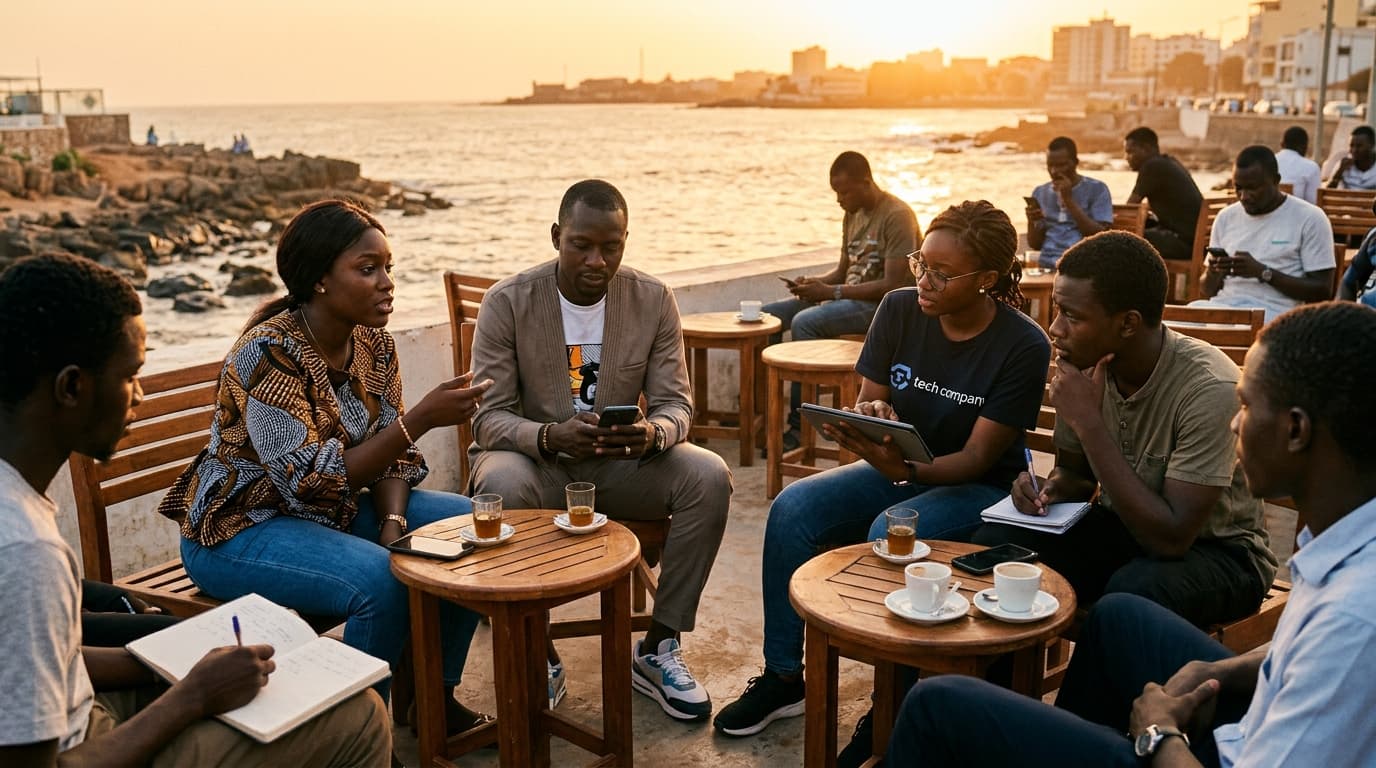
In Dakar, the setting sun tints the city with a golden light that seems to suspend time between two eras. On the terraces of Corniche cafés, young people debate with a fervor that recalls both the discussions of elders under the palaver tree and the digital forums where they spend their nights. They speak of family, faith, gender, future—themes as old as humanity, but which they approach with new vocabulary. This Senegalese youth, like so many others across the continent, lives a deep and creative tension: how to honor traditions without being imprisoned by them? How to embrace modernity without losing one's soul? Family, that sacred institution, lies at the heart of this redefinition. Once a pyramidal structure where elders dictated trajectories, it is becoming a space of negotiation. Aminata, a twenty-four-year-old law student, recounts how she had to convince her parents to let her pursue a master's degree in France. "They feared I would lose my values, that I would become a stranger in my own skin," she confides, her eyes bright with gentle determination. Yet every video call is a ritual where she shares her discoveries while reaffirming her attachment to customs. The family does not break; it stretches, adapts, like those baobab roots that seek water without leaving the earth. Religion, a pillar of Senegalese society, is also undergoing subtle metamorphoses. In the mosques of Touba as in the churches of Dakar, young practitioners bring their smartphones, record sermons, share verses on social media. Faith remains intact, but its expression pluralizes. Cheikh, a young marabout of thirty, observes this phenomenon with benevolent curiosity. "Spirituality is not a frozen monument, it is a flowing river," he says. His disciples come to consult him for ancestral problems—marriage, health, prosperity—but also for questions of professional ethics or modern existential crisis. Religious tradition thus becomes a dialogue rather than a monologue, a compass rather than a cage. Gender is perhaps the most fractured terrain of this evolution. Patriarchal norms, long considered immutable, are being questioned by a generation of educated women and reflective men. Awa, an engineer at a tech startup, fights daily against prejudices that would confine her to the role of wife and mother. "I want everything: a career, a family, a voice in society," she asserts. Her male colleagues, like Mamadou, listen to her and begin to interrogate their own conditioning. "We were taught to be strong, but not to be vulnerable, to lead but not to listen," he acknowledges. This reconfiguration of roles does not happen without friction—it generates family conflicts, social misunderstandings—but it opens the way to more balanced relationships. Modernity, often perceived as a threat from elsewhere, is actually being reclaimed by this youth. Digital technologies, studies abroad, global cultural influences are not forces of alienation, but tools of identity creation. Young Senegalese mix mbalax with afrobeats, wear boubous with sneakers, discuss Wolof philosophy on Twitter. They are building a hybrid, fluid identity that refuses simplistic dichotomies between "tradition" and "modernity." Like the desert cactus, which draws water deep from the soil while developing stunning flowers to adapt to its environment, this generation draws from its roots to blossom in unprecedented ways. This identity redefinition is not a rejection of the past, but a living reinterpretation. Social tensions—between generations, between genders, between worldviews—are not flaws, but spaces for growth. Senegalese youth, like that of the entire continent, is writing a new chapter of African history: a chapter where one can be faithful to one's ancestors while looking toward the horizon, where one can honor community while asserting individuality. In this process, painful and exhilarating, an Africa is taking shape that no longer endures its destiny, but sculpts it with its own hands, its own dreams, its own fertile contradictions.