Community
Sunulife · Fri, Jun 26, 2026 · 2 min read
From Dakar to Castel Volturno: On the diaspora we look at least, and that pays the most
There is an Italy the brochures do not show. It begins where the postcard ends, on that coastal strip north of Naples where the unfinished buildings of the speculation years now shelter a population that came from West Africa. Castel Volturno. The name means nothing to the tourist. It means everything to those who have lived there, or who know someone who washed up there after the crossing. Here live Senegalese, Ghanaians, Nigerians, Ivorians — a diaspora that did not choose Italy as a prestige destination, but as the door that opened, or rather the one that was not quite closed.
The Senegalese diaspora has its golden narratives. Paris, its lights and institutions. Canada, its promise of organized welcome. New York, its myth. Italy has no myth. It has field labor, the burning sun, and a system with a name: the caporalato.
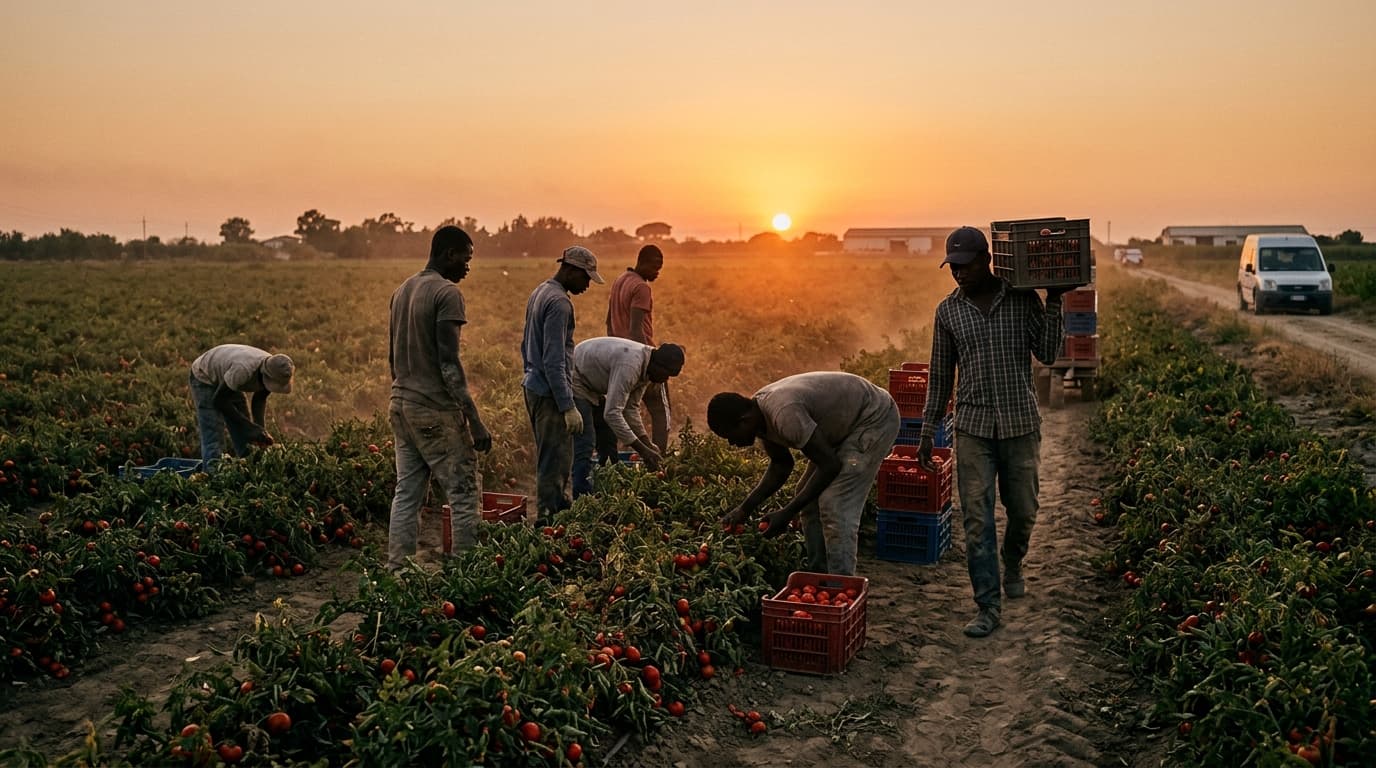
The caporale is a middleman. He is the one who, at dawn, loads the men into a van to take them to the fields of tomatoes, tobacco, citrus. He is the one who sets the day's price — often a few euros an hour, sometimes less — and who takes his cut from the transport, the water, the sandwich. He is the one who decides who works and who is left behind. The worker, undocumented more often than not, has no recourse. He cannot complain, because he does not exist administratively. He cannot negotiate, because a hundred others are waiting for his place. He cannot leave, because leave for where?