
Perspectives

From Blackboard to Political Arena: The Lesser-Known Journey of Abdoulaye Wade

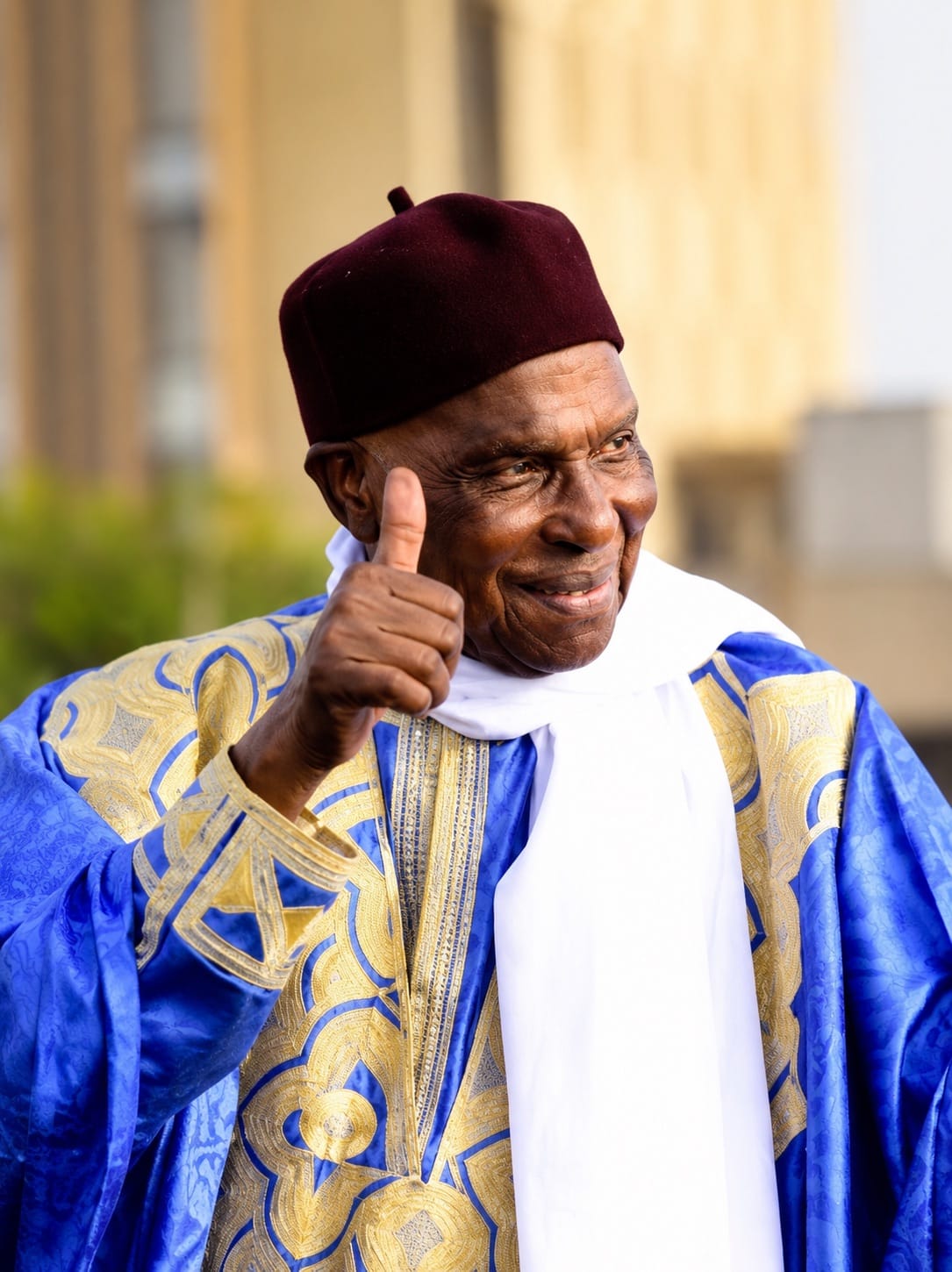
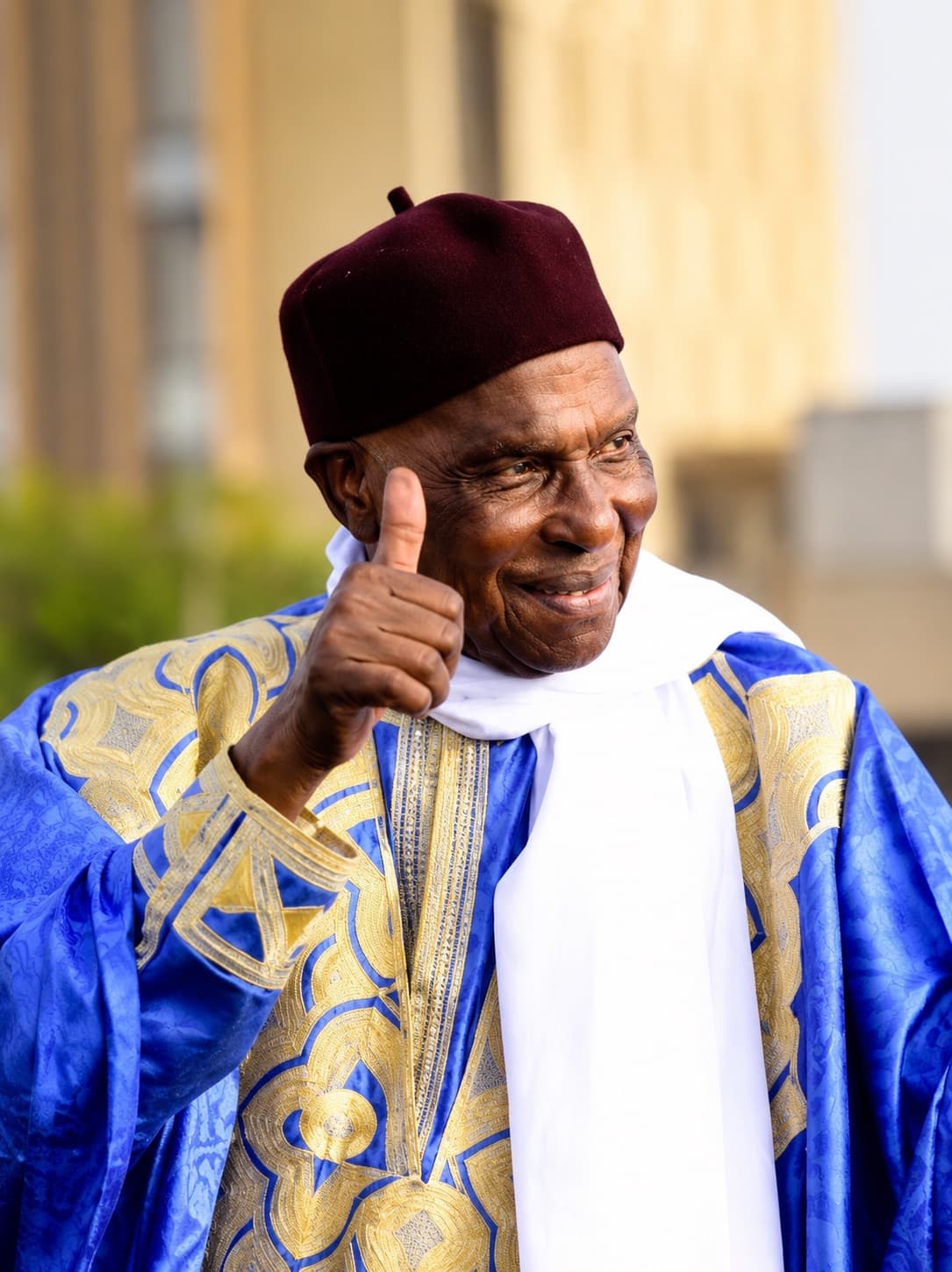
Before becoming a lawyer and president, Abdoulaye Wade was a student at William Ponty School and a teacher in Thiès, then studied at Lycée Condorcet in Paris, demonstrating early excellence and ambition.
Mouhamadou Moustapha SowSun, May 31, 20268min read
From Blackboard to Political Arena: The Lesser-Known Journey of Abdoulaye Wade

Lawyer, mathematician, professor of economics, political opponent, founder of the Senegalese Democratic Party (PDS), President of the Republic—Abdoulaye Wade has held several functions and occupied various positions on the national and international stage throughout his career. Elected president in 2000, the media quickly presented him as "the most educated head of state in Africa," given his rich and impressive background. However, his academic, political, and professional journey, which is both varied and complex, leaves a gap regarding a specific and important period of his life. There is little or no information about his experience as a student at the renowned École Normale William Ponty (ENWP), as a teacher in Thiès, as a boarding school master at Lycée Van Vollenhoven (now Lycée Lamine Guèye), and as a student at the prestigious Lycée Condorcet in Paris in 1950. This contribution, based on interviews and archival documents, seeks to shed light on a little-known chapter in the journey of this man, whose centenary Senegal and Africa are currently commemorating. Abdoulaye Wade was born on May 29, 1926, in Kébémer, in the former district of Louga. It is in this ancient historical province of Ndiambour (kingdom of Cayor) that the future President of the Republic of Senegal took his first steps in French education before continuing his journey in Saint-Louis and then Dakar, where he obtained his elementary school certificate. It is also worth noting that in the same province of Ndiambour, on September 5, 1935, Abdou Diouf, his predecessor as head of Senegal, was born. "Intelligent and dedicated" to his studies, Abdoulaye Wade passed the selective federal entrance exam for the William Ponty Normal School (ENWP) in Sébikotane, known as Sébiponty. This institution was the cradle of training for a multitude of Francophone African executives, some of whom later came to power as heads of state. Among its alumni are prestigious figures such as Modibo Keita, Félix Houphouët-Boigny, Hubert Maga, Hamani Diori, Émile Zinsou, and himself, Abdoulaye Wade. It was in this temple of knowledge that the young student Abdoulaye Wade enrolled in the primary education section. His classmates included Senegalese Mamadou Diop, Dahomean Gouton Albert Adande, Sudanese Mory Sidibé, Mauritanian Moctar Tidiane Bâ, Guinean Birama Cissokho, and Ivorians Wadjou Koffi, Guangou René Effi, and Mori Touré. During his training at Ponty, he became enthusiastic about his general psychology courses. They would later prompt him to enroll in the General Psychology Certificate when he became a student in Besançon. Motivated and ambitious, Abdoulaye Wade passed his final exam at ENWP with the grade of "Fairly Good." Now a supernumerary teacher in the common framework of primary education in French West Africa (AOF), the normal school graduate was assigned to the urban school of Thiès on October 30, 1947. At that time, most graduates of this institution were assigned to "bush posts" at the beginning of their careers. Thus, for the young Abdoulaye Wade, the assignment to Thiès was a relatively privileged position. Indeed, the city held a strategic position within the AOF due to its status as a major railway hub, facilitating exchanges and interactions among various populations of the federation. Teaching a first-year elementary class (CE1) with a fairly large number of students (59), Abdoulaye Wade quickly caught the attention of his superiors. The Inspector of Education, Mr. Bernard, described him as a "beginning teacher who has goodwill and authority" over his students. Most teachers of his generation had a vocation to be teachers and to make a career of it, but Abdoulaye Wade dreamed of pursuing university studies and being among the best of his generation. Once settled in Thiès, the young teacher, driven by strong intellectual and professional ambitions, quickly turned his sights toward other horizons. His stay in this city was only a transitional step in his journey. Nourishing higher academic aspirations, he planned to leave Thiès to continue his training in secondary schools in Dakar, with the goal of obtaining his baccalaureate. "I wasn't assigned to Thiès to stay long; my ambition was to continue my studies," he recalls. Abdoulaye Wade seized the opportunity when a rectoral note from the Directorate of Education opened the way for teachers wishing to improve themselves to continue their studies. However, the beginnings of his teaching career were temporarily interrupted by his military service obligations. Abdoulaye Wade thus performed his military service in October 1948 before being discharged a year later as a second-class soldier assigned to the 7th Regiment of Senegalese Tirailleurs (RTS) in Ouakam (Dakar). Abdoulaye Wade returned to teaching and was assigned as a boarding school master at Lycée Van Vollenhoven (now Lycée Lamine Guèye). During his professional stay at this institution, he was judged by the Academic Inspector, Mr. Fajadet, as "a conscientious, dedicated young man who gave full satisfaction." While fulfilling his duties as a boarding school master, the former "Pontin" worked to prepare for the first part of the baccalaureate, which he obtained in October 1949. Abdoulaye Wade is a student whose memory and work capacity logically prepare him for success. He won the mathematics and history prizes that same year, he specifies. His exam and competition results allowed him to obtain a scholarship from the City of Dakar in 1950 to continue his studies in France. It was in the winter of 1950 that the future President of the Republic and founder of the Senegalese Democratic Party (PDS) arrived in Paris, France. Abdoulaye Wade, the brilliant student of Lycée Condorcet At the end of the Second World War, the development of education took place under pressure from the newly elected African representatives sitting at the Palais Bourbon (France). France strengthened its policy of granting scholarships to African students to pursue their studies in the metropole. Nearly 2,000 African or Malagasy high school and university students benefited from scholarships in the years 1949-1950 to pursue their secondary or higher education in France. The young high school student Abdoulaye Wade was part of this cohort of Senegalese who arrived in Paris in the winter of 1950 thanks to a scholarship from the municipality of Dakar, headed by Maître Lamine Guèye. He was 24 years old at the time. He already had a solid intellectual and professional culture reinforced by his time in the army. Having lived in Saint-Louis, Dakar, and Thiès, the young scholarship holder was not really disoriented when he arrived in the French capital. He quickly familiarized himself with and adapted to the rigors of metropolitan life. The Paris of that era, still bearing the scars of the German occupation, was also the privileged place for the intellectual training and politicization of colonial African elites, such as Léopold Sédar Senghor and Mamadou Dia. Abdoulaye Wade was preceded there by his elders like Cheikh Anta Diop. He did not stay long enough to experience and participate in the political and intellectual ferment. Upon arriving in the French capital for his studies, Abdoulaye Wade intended "to become an engineer." "It was by chance that I went to high school," he says, where he finally enrolled on February 28, 1950, at Lycée Condorcet, named after the French philosopher and mathematician Nicolas Condorcet. Founded in 1803, this high school was renowned for the excellence of its education. It welcomed the brightest students from the French capital. The writer Marcel Proust, the socialist Jean Jaurès, and the philosopher Henri Bergson also completed their humanities studies there, as stated on the school's website. It was in this excellent high school, located in the 9th arrondissement of Paris, that Abdoulaye Wade put his intelligence and talents to the test against other brilliant minds. It did not take long for him to distinguish himself with his mathematics teacher. "I had already passed the first part of the baccalaureate and now I had to pass the second," he recalls. At Lycée Condorcet, the student Abdoulaye Wade demonstrated promising abilities in general mathematics to his teacher, who was captivated by his answers to questions posed to the class. He remembers that after his first general mathematics class, he immediately bought, despite his modest scholarship, a mathematics book to deepen his knowledge and adapt to the high academic demands of this prestigious institution. Thanks to his dedication, he passed the second part of the mathematics baccalaureate in June of the same year. Obtaining this diploma opened the doors to higher education. To begin his student career, Abdoulaye Wade then chose to leave the French capital to settle in Besançon, which would become his adopted city for many years. The 1950s marked the beginning of his university education and his union and political engagement for the liberation of Senegal and Africa. This new page of history took him from the blackboard to the political and union arena.