
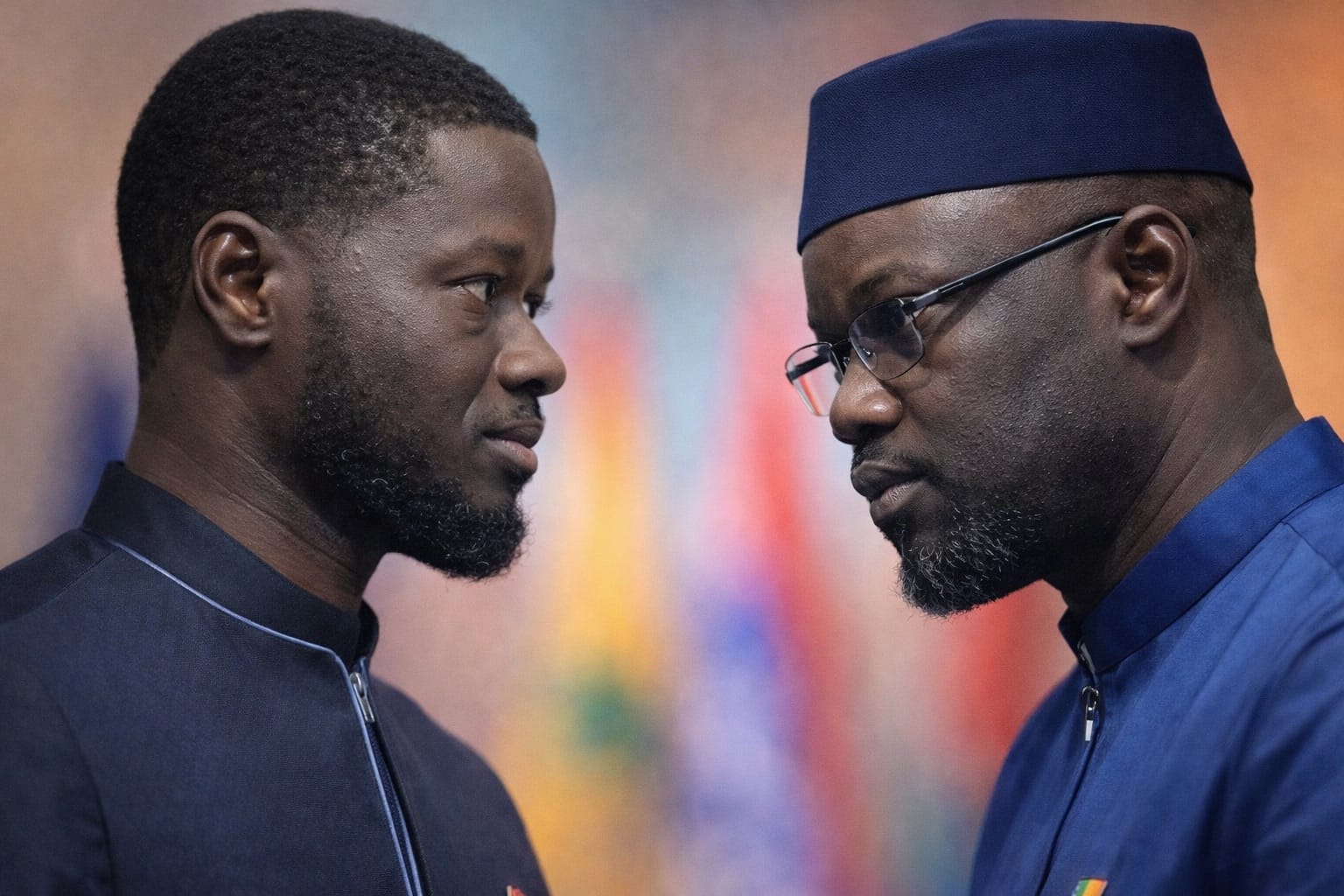
Sonko vs. Diomaye: The Betrayal Under the Baobab
Ousmane Sonko and Bassirou Diomaye Faye rose together as revolutionary leaders, but after Diomaye became president, he betrayed their radical oath, prioritizing state stability and ultimately imprisoning his former mentor, Sonko.
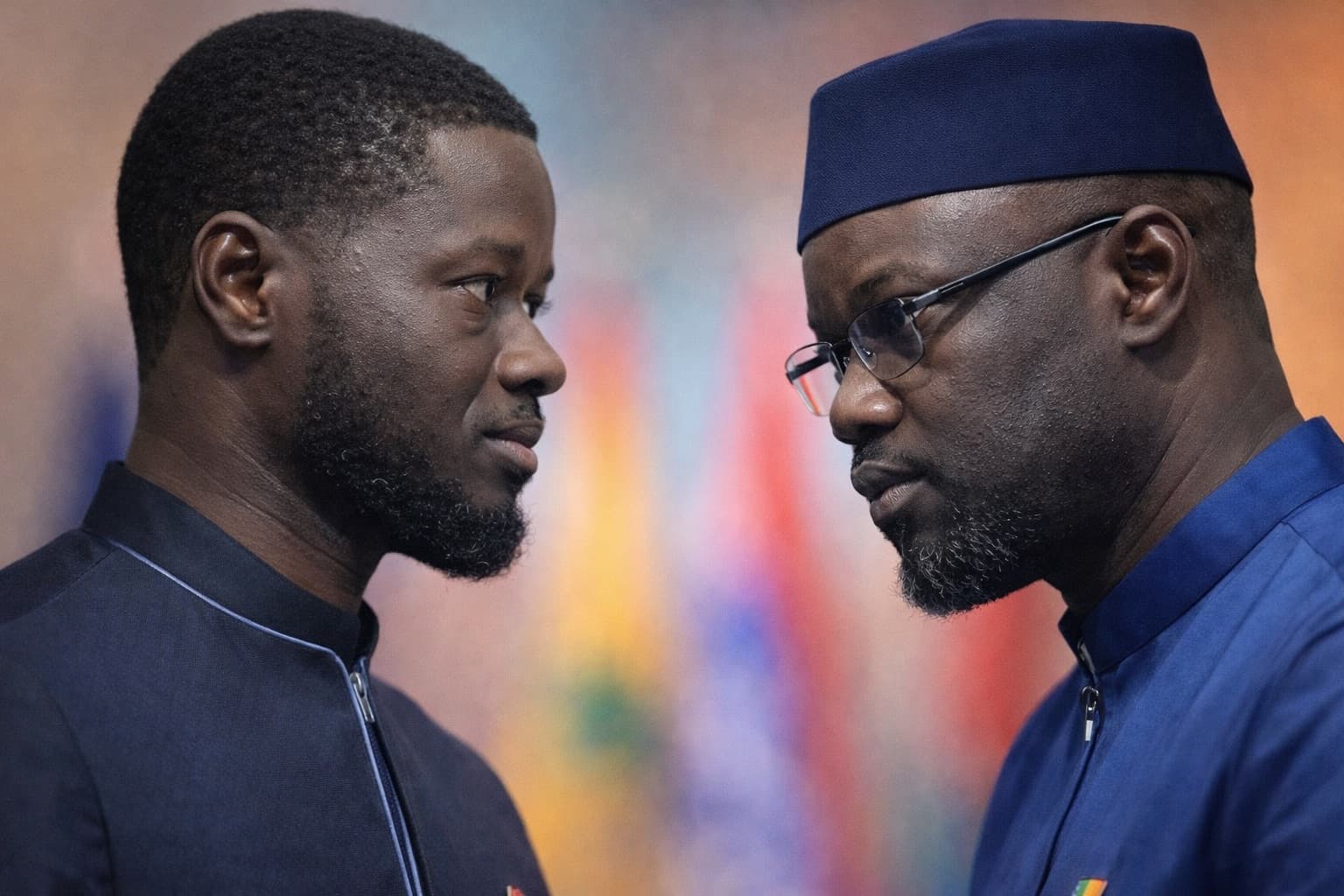
In the golden haze of Dakar’s restless dawn, where the call to prayer mingled with the salt wind off the Atlantic, two souls first crossed like rivers destined to meet. Ousmane Sonko was the firebrand, tall and unyielding, his voice a thunder that cracked the silence of fear. Bassirou Diomaye Faye, Diomaye to those who loved him, was the quiet river, deep and steady, eyes that saw tomorrow even when today bled. They met not in palaces but in the dust of protest squares, where young Senegalese marched with nothing but cardboard signs and the stubborn belief that their country could be free.
For years they fought side by side against the old regime, the one that had turned their beloved Senegal into a cage of debt, corruption, and silenced dreams. Together they endured tear gas that burned the lungs like betrayal, nights in cramped cells where the only light was the spark of their shared conviction. Sonko would pace the concrete floor, fists clenched, swearing by the ancestors that the people would rise. Diomaye would sit cross-legged, voice calm as the Casamance river at dusk, reminding him, “Brother, we do not fight for revenge. We fight so our children will never know these chains.”
They became more than allies. They became blood, chosen, unbreakable. When Sonko’s wife cooked thieboudienne in hidden safe houses, Diomaye was at the table, laughing until tears came. When Diomaye’s mother fell ill and the hospitals demanded bribes they could not pay, Sonko emptied his own pockets and stood guard outside her ward like a lion. In the long exile of opposition, banned from screens, hunted by secret police, their names whispered like curses by the powerful, they promised each other one sacred thing: Whatever comes, we rise together or we fall together. Senegal first. Always.
The years carved them into legends. Sonko became the voice that could not be silenced, his rallies drawing oceans of red-and-green flags. Diomaye was the strategist, the one who turned rage into roadmaps, who studied the law by candlelight so no judge could twist it against them. They bled for the same cause: land for the landless, justice for the forgotten, dignity for every Senegalese soul from Saint-Louis to Ziguinchor. And when the regime finally trembled, when the old president’s grip slipped like sand through desperate fingers, it was Sonko who stood on the stage in Place de la Nation and declared, “The time has come.”
But Sonko could not run. The old regime’s final poison, trumped-up charges, a barred candidacy, stood between him and the palace. On a sweltering afternoon in 2024, with the crowd chanting his name like a prayer, Sonko took Diomaye’s hand, raised it high, and spoke words that would echo forever: “I cannot carry the flag. But my brother can. Diomaye mooy Sonko. Today I choose him among all men, because his heart is mine and his vision is ours.”
The people roared. Diomaye wept openly, not from joy alone but from the weight of the trust placed upon him. He won in a landslide that shook the continent. And when the new president stood on the marble steps of the Palais de la République, he turned to the man who had lifted him and said, “Prime Minister Sonko. My brother. We build the Senegal we dreamed of, in your name as much as mine.”
For a shining season, it seemed the dream had arrived. They worked through nights, rewriting laws, renegotiating debt with the cold-eyed foreigners who had feasted on their nation for decades. Sonko pushed hardest, demanding sovereignty, refusing crumbs, reminding everyone that freedom without dignity was just another cage. Diomaye smiled in public, signed the papers, and told the cameras the revolution was complete.
But power, they say, is a slow venom. It does not strike like a cobra. It drips.
Whispers began in the corridors of the palace. Advisors, those sleek men in suits who had once served the old regime, murmured to Diomaye that Sonko was “too radical,” that the IMF would not bend unless the firebrand was cooled. Investors wanted stability, they said. Tourists wanted calm beaches, not revolutionary speeches. And Diomaye, once the quiet river, began to listen. He told himself it was for Senegal. He told himself the people needed bread today more than justice tomorrow. He told himself many lies.
One evening, under the same baobab tree where they had once sworn their oath, Sonko confronted his brother. “What happened to the man who sat with me in the dark? The one who said we would never compromise the soul of our nation?”
Diomaye looked away, toward the lights of the city that now bowed to him. “The world is bigger than our old promises, Ousmane. I am president now. I must govern for all.”
Sonko’s heart cracked audibly in the silence that followed. He saw it then, the subtle shift in posture, the new distance in the eyes that once reflected his own fire. But he still believed. “Then govern,” he said softly. “But never forget who carried you here.”
The betrayal did not come with shouts or drawn swords. It came with silence, then with papers, then with the cold machinery of the state they had once fought together.
It began with accusations, carefully worded, leaked to friendly journalists. “Irregularities.” “Threats to stability.” Old cases reopened, new ones invented. Sonko watched in disbelief as the man he had chosen stood before the nation and spoke of “necessary sacrifices for unity.” Diomaye’s voice, once warm as millet porridge on a cold Harmattan night, now sounded like every president who had come before, polished, reasonable, and hollow.
The arrest came at dawn. Soldiers, Senegalese sons in the uniforms their own revolution had cleansed, stormed Sonko’s home while the city still slept. They found him praying, as always. He did not resist. As the handcuffs clicked, he looked straight into the camera that Diomaye’s own press team had placed there and said only one sentence: “I forgive you, brother. But Senegal will not.”
They took him to a prison on the edge of the desert, the same kind they had once condemned. Iron bars. Concrete dreams. And through the small window, Ousmane Sonko could see the horizon where they had once marched together under a rising sun.
Inside those walls, the firebrand grew quieter, but not broken. He wrote letters he knew might never reach the people. He spoke to the guards who had once chanted his name in the streets. And in the long nights, he allowed himself the grief he had never shown in public: the grief of a man who had given everything, his freedom, his youth, his voice, only to be betrayed by the one soul he trusted more than his own.
Far away in the marble halls, President Bassirou Diomaye Faye sat alone after the cameras left. He stared at an old photograph: two young men laughing under the baobab, arms around each other, eyes bright with impossible hope. A single tear traced the cheek of the most powerful man in Senegal. He wiped it away quickly. Power demands dry eyes.
Outside, the people divided. Some still sang “Diomaye mooy Sonko,” confused, heartbroken. Others marched again, this time against the new face of the old cage. But the saddest sound in all of Senegal was the silence between two brothers who had once been one.
Years later, children would ask their grandparents: “How did the heroes fall?” And the old ones would shake their heads, eyes wet, and answer, “Because even the purest hearts can be poisoned when one drinks from the cup of power alone.”
And somewhere in a desert prison, a man who had given Senegal his life sat on the floor, whispering to the wind the only truth that still mattered: “I loved him like a brother. And he chose the throne over the dream.”
Inspired from the story and the potential future story of Sonko et Diomaye.
