
Heritage

Thiaroye 1944: A Massacre of Memory and Justice

In 1944, French forces massacred unarmed West African WWII veterans in Senegal over unpaid wages. France long suppressed the truth, with disputed death tolls and burial sites, fueling ongoing demands for justice and historical recognition.
SunulifeSun, Jun 29, 20258min read
Thiaroye 1944: A Massacre of Memory and Justice

Introduction

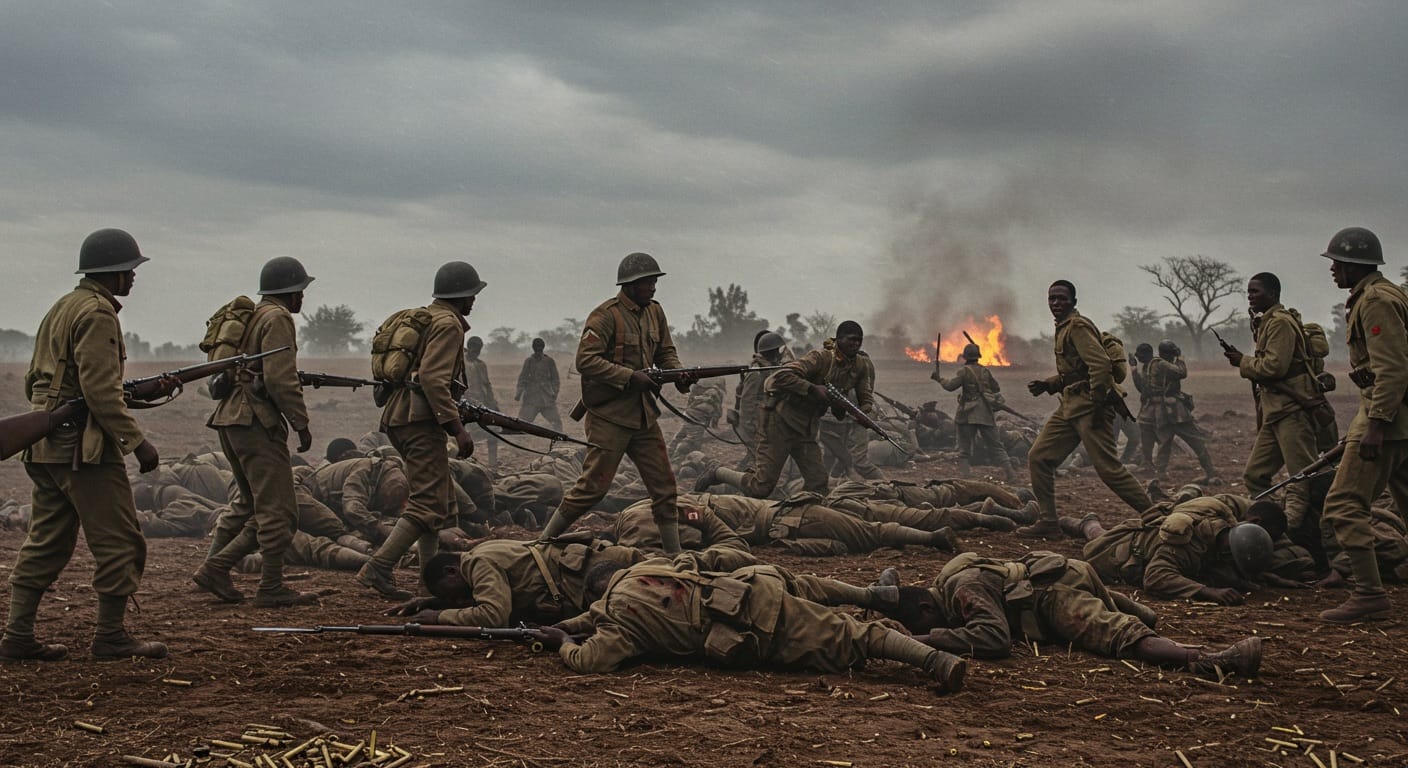
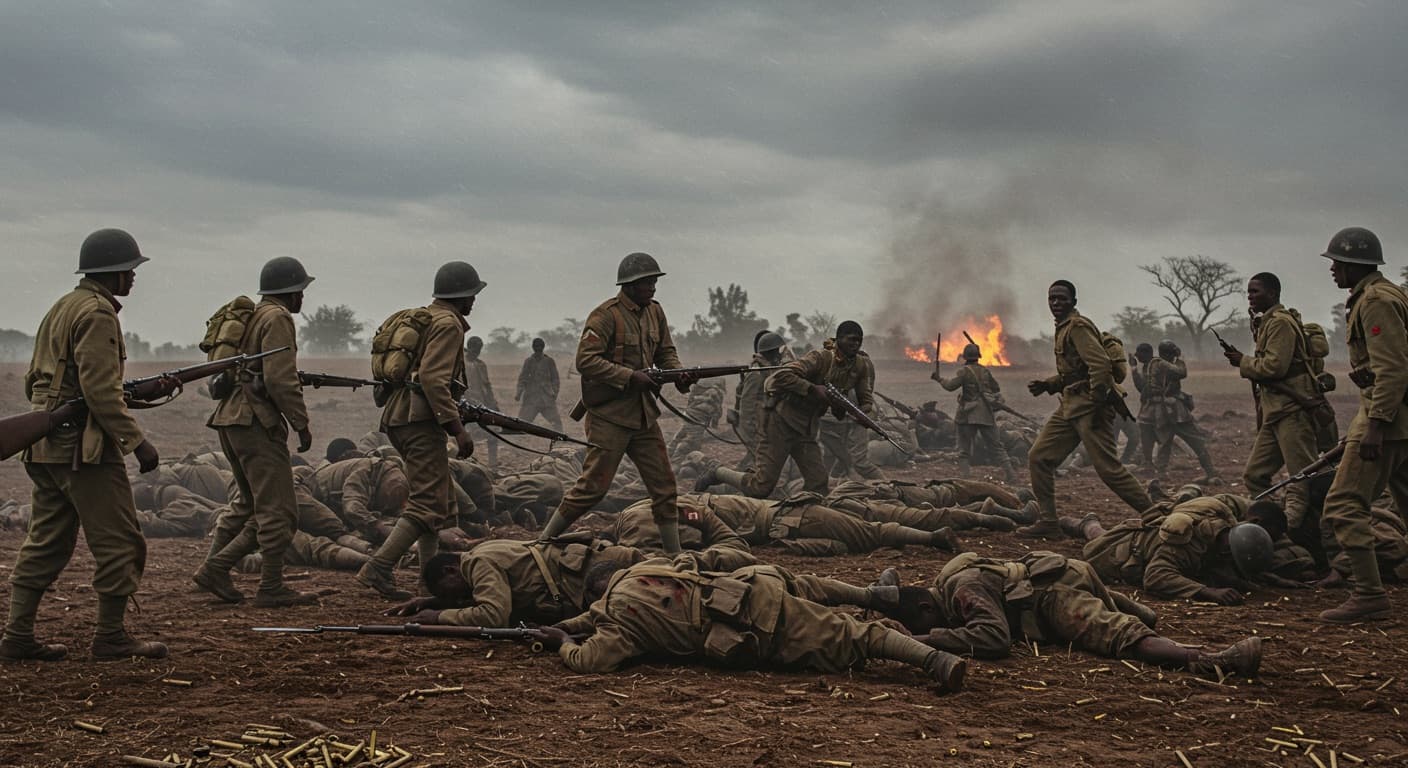
On December 1, 1944, at a military camp in Thiaroye, Senegal, French colonial forces opened fire on unarmed West African soldiers who had fought for France in World War II. These soldiers, part of the Tirailleurs Sénégalais—a colonial infantry unit drawn from across French West Africa—were massacred after demanding unpaid wages and equal treatment. Official French reports claimed 35 deaths, but historians and activists estimate the toll could be as high as 300 to 400. The Thiaroye Massacre remains one of the darkest episodes of France’s colonial history, shrouded in secrecy, denial, and controversy for decades. This article delves into the real story, the controversies, and the brutal killing of these soldiers, drawing on historical accounts, declassified documents, and ongoing efforts to uncover the truth.

The Context: Senegalese Tirailleurs and World War II

The Tirailleurs Sénégalais were not exclusively Senegalese but included soldiers from across French West Africa, including modern-day Mali, Guinea, Burkina Faso, Ivory Coast, Benin, Chad, and Niger. Recruited since 1857 to bolster French colonial campaigns, they were instrumental in both World Wars. During World War II, approximately 120,000 colonial troops fought in the 1940 Battle of France, facing heavy losses—around 10% perished in combat or were massacred by German forces, such as at Chasselay. Many were captured and held in German prisoner-of-war camps (Frontstalags), where they endured harsh conditions, though French claims of preferential treatment by Germans to undermine colonial loyalty lack evidence. After France’s liberation in 1944, surviving tirailleurs were repatriated to West Africa. By November, around 1,600 to 1,950 soldiers, many former prisoners of war, were gathered at the Thiaroye military camp, 15 kilometers from Dakar. These men, who had fought with courage and endured years of captivity, expected their promised wages and demobilization bonuses. Instead, they faced systemic discrimination, unequal pay compared to white French soldiers, and administrative delays.

The Spark: A Demand for Justice

Tensions at Thiaroye arose from disputes over unpaid wages and demobilization payments. Before leaving France, the tirailleurs were promised back pay for their service and captivity, but payments were inconsistent. Some received partial sums in transit centers like La Flèche, Versailles, or Rennes, while others got nothing. A French ministerial proposal to align their pay with French soldiers’ was rejected, deepening the soldiers’ frustration. On November 21, 1944, the tirailleurs arrived in Thiaroye, expecting resolution. Instead, French authorities issued a circular on November 16 stating that payments should have been settled in France, effectively denying the soldiers’ claims. A receipt given to the soldiers in Morlaix, France, detailed owed amounts, but a December 4, 1944, French note claimed the state owed them nothing—a decision historians argue was made at the highest levels to avoid accountability. On November 25, a group of tirailleurs, scheduled to depart for Bamako, refused to leave until their payments were settled. This act of defiance escalated tensions. On November 28, General Marcel Dagnan, commander of the Senegal-Mauritania division, visited the camp. He encountered hostility, with his car reportedly blocked and possibly damaged. Dagnan claimed he was nearly taken hostage, though historians dispute this, noting the soldiers were unarmed and seeking dialogue. Feeling his authority challenged, Dagnan, with approval from General Yves de Boisboissel, decided to make a show of force.

The Massacre: A Planned Slaughter

On December 1, 1944, at 5:30 AM, French colonial forces—comprising three companies of the 1st and 7th Regiments of Senegalese Tirailleurs, local National Gendarmerie units, elements of the 6th Regiment of Colonial Artillery, and an M3 Stuart tank—surrounded the Thiaroye camp. The operation, led by Dagnan and executed by Colonel Le Berre, was heavily armed, with machine guns and armored vehicles. At 6:30 AM, the soldiers were called to assembly. After two and a half hours of tense negotiations, French forces opened fire at approximately 8:55 AM, according to a report by Commander Le Treut (later altered to 9:20 AM in official records). The tirailleurs were largely unarmed, with one reported instance of a soldier brandishing a knife before being disarmed. French claims of an armed mutiny are unsupported by declassified documents, which suggest premeditation. A French officer’s wife reportedly warned a Senegalese cook to hide that morning, indicating the attack was planned. The official French death toll was 35, with 34 survivors arrested and sentenced to one to ten years in prison for mutiny. However, historians like Armelle Mabon and Martin Mourre estimate 300 to 400 deaths, based on discrepancies in soldier counts (1,600–1,700 embarked from France, but only 1,300 recorded in Thiaroye) and reports of mass graves.

The Cover-Up: A Conspiracy of Silence

The French authorities moved swiftly to suppress the massacre’s details. Colonial inspector Louis Mérat recommended in March 1945 that “oblivion” be facilitated to erase the event from memory. The massacre was not reported in metropolitan France, except among high-ranking officials, and was omitted from French history curricula. In Senegal, the 1988 film Camp de Thiaroye by Ousmane Sembène, which depicted the massacre, was banned in France for 17 years and censored in Senegal, allegedly under French pressure. The 34 imprisoned survivors were pardoned in 1947 by French President Vincent Auriol during a visit to Senegal, but they were not exonerated, and their widows were denied veteran pensions. French narratives framed the tirailleurs as prone to revolt, citing unproven claims of German influence in POW camps. Declassified documents reveal contradictions, such as altered timestamps and missing archives, suggesting a deliberate cover-up.

The Controversy: Death Toll and Burial Sites

The death toll remains a central controversy. Official French records cite 35 deaths, but historians argue this is a gross underestimation. Senegalese historian Mbaye Gueye estimated 156 missing persons in 1995, while Ousmane Sembène claimed 380 victims. Mabon and Mourre’s 300–400 estimate is based on archival gaps, bullet counts, and survivor testimonies. Recent excavations in May 2025 uncovered skeletons with bullets lodged in them, confirming the massacre’s violence but not yet clarifying the full scale. The burial sites are another unresolved issue. The Thiaroye military cemetery contains 202 unmarked graves, but it is unclear how many are massacre victims. Locals believe the cemetery is haunted, and the Senegalese army restricts access, preventing photography or filming. Some historians suspect additional mass graves, possibly under a baobab tree, but excavations are ongoing. Biram Senghor, son of victim M’Bap Senghor, has expressed anguish over not knowing his father’s burial site, filing a 2024 lawsuit against France for “concealment of a corpse.”

France’s Reluctant Reckoning

For decades, France minimized the massacre, framing it as a response to a mutiny. In 2012, President François Hollande called it a “bloody repression” during a visit to Dakar, promising to share archives. However, only partial documents were transferred in 2014, and many remain classified as “sensitive.” In 2024, President Emmanuel Macron acknowledged the event as a “massacre” in a letter to Senegalese President Bassirou Diomaye Faye, marking a shift in rhetoric. On July 18, 2024, six victims were declared “dead for France” by the French National Office of Combatants and War Victims, granting symbolic recognition but no reparations. Senegalese historians, led by figures like Mamadou Diouf, continue to demand full access to French archives. A French parliamentary commission, proposed for March 2025, aims to investigate further, but skepticism persists about France’s willingness to disclose all records. Critics argue that France’s selective release of documents and reluctance to apologize reflect a lingering colonial mentality.

Senegal’s Fight for Memory

In Senegal, the massacre is a vivid symbol of colonial injustice. Since 2004, August 23 has been the “Day of the Senegalese Tirailleur,” established by President Abdoulaye Wade, and December 1 was declared the official commemoration day in 2024 by President Faye. Cultural works, including Sembène’s film, murals, songs, and plays, keep the memory alive. The Thiaroye 44 college and local artists like Magui, Babacar, and Aïcha work to educate younger generations, as the massacre is not widely taught even in Senegal. Biram Senghor’s 2024 lawsuit, supported by historian Armelle Mabon, accuses France of a “state lie” and demands transparency about the victims’ remains and reparations. Senegalese Prime Minister Ousmane Sonko has emphasized that the narrative belongs to Senegal, not France alone. The 80th anniversary in 2024 saw ceremonies attended by African leaders, with Faye calling for the massacre to be taught in schools to foster truth without resentment.

The Broader Implications

The Thiaroye Massacre highlights the deep inequalities of colonial rule. The tirailleurs, hailed as heroes when fighting for France, were discarded when demanding their rights. The event catalyzed awareness of colonial exploitation, influencing post-war African independence movements. The Rassemblement Démocratique Africain, formed in 1946, organized pilgrimages to Thiaroye, framing the victims as “martyrs of colonialism.” The massacre’s suppression in French history reflects a broader reluctance to confront colonial atrocities. Historian Iba Der Thiam notes a “part-racism and colonial mentality” in erasing African contributions from history. The ongoing battle for archives and recognition underscores a power struggle over who controls historical narratives.

Conclusion

The Thiaroye Massacre of 1944 was not a spontaneous clash but a premeditated act of colonial violence against unarmed African soldiers who dared demand justice. The controversy over the death toll, burial sites, and withheld archives reveals a persistent struggle for truth. While France has begun to acknowledge the massacre, full accountability remains elusive. In Senegal, the tirailleurs are honored as heroes, their memory preserved through art, activism, and commemoration. As Biram Senghor, now in his late 80s, seeks closure for his father’s death, the fight for justice continues—a testament to the enduring wounds of colonialism and the resilience of those who demand their history be told.